
0 引言
交通运输系统点多、线长、面广,是低空经济应用的主阵地,在货运物流、载客出行、交通运输生产作业、行业公共服务等领域具有广泛而丰富的应用场景,已广泛应用于城市末端配送、道路桥梁巡查巡检、航道检测、拥堵治理、医疗救援等领域。2021年,中共中央、国务院印发《国家综合立体交通网规划纲要》[2],提出“发展交通运输平台经济、枢纽经济、通道经济、低空经济”“促进交通通道由单一向综合、由平面向立体发展,减少对空间的分割,提高国土空间利用效率。统筹考虑多种运输方式规划建设协同和新型运输方式探索应用,实现陆水空多种运输方式相互协同、深度融合”。
多位专家学者对低空交通物流、基础设施、空域管理等问题展开了系统研究,形成了多维度、跨学科的理论框架。赵景龙[5]认为,低空经济包括了依托于低空空间的产业体系和价值网络,其外延则涉及广泛的产业融合领域,具有多维核心要素。李连成等[4]提出应持续推动空域改革、加强顶层设计、拓展应用场景、完善法律法规,打造经济增长新引擎。王韬[6]认为“路空一体”是低空交通运输的基本路径,强调交通基础设施的先行性,指出我国已建成的公路、铁路网络为无人机物流、电动垂直起降飞行器(electric Vertical Take-off and Landing, eVTOL)等新业态提供了物理空间与数据交互基础。樊一江等[7]从低空经济的内涵和特征的角度,提出了我国低空经济阶段特征及货运物流、载人出行、文旅活动、生产作业等应用场景。张夏恒等[8]从“无人机支撑的低空生产服务方式”出发,强调通过信息化、数字化管理技术赋能,与经济社会多领域深度整合,形成具有显著新质生产力特征的综合经济形态。洪群联[9]对低空服务业的概念与特征进行了界定,并提出发展条件与推进对策。周钰哲[10]基于内生增长理论与创新生态系统理论,将政策协同、基础设施、技术进步、资本投入、安全保障及法律法规等关键因素纳入统一分析框架,厘清了低空经济产业发展的理论机制。程承旗等[11]指出低空交通的本质是通过三维空间重构运输效率,应聚焦空域资源稀缺与需求增长之间的失衡,通过动态航路分配、混合运行管理等技术创新破解瓶颈。陈倩雯[12]基于深圳市的实践提出“设施网+服务网”双轮驱动模式,强调起降点标准化建设与通信导航网络覆盖的协同性,可借鉴日本复合布局经验,复用现有交通枢纽资源。张洪海、廖小罕等学者[13-14]充分论证了低空航路的构建思路,认为以低空航路为核心的基础设施对于发展空中交通和智慧交通具有重要意义。此外,多位学者从基础设施、管理政策、技术创新和产业发展等角度分析了低空交通运输的问题调整和思路建议,并提出了相应的实施路径[15-17]。上述研究为把握低空经济与低空交通运输的内在逻辑提供了重要启示。
总体来看,关于低空交通运输的研究多是某一特定领域的点状突破,在完善现代化综合交通运输体系背景下,针对低空交通运输发展面临的规则针对性不强、陆空设施协同不足、场景运营模式不成熟、安全监管体系不适应等多方面挑战,缺乏战略性、系统性、整体性研究,特别是缺乏对“陆空协同”系统性机理的深入探讨。基于此,本文以完善现代化综合交通运输体系为目标引领,以培育交通运输领域新质生产力为价值导向,在陆空协同发展视角下聚焦以下问题开展研究:一是系统梳理国际发展实践及共性特征,以厘清低空交通运输的概念内涵与属性定位;二是从综合交通系统演进逻辑出发,揭示低空交通运输与综合交通运输的互动机理;三是构建推动低空交通运输发展的具体路径,并提出系统性对策建议,以期为我国低空交通运输领域政策制定、理论深化与产业实践提供研究依据与决策参考。
1 低空交通运输的概念特征
1.1 低空交通运输的概念
低空交通运输是以飞行高度为主要划分依据的交通领域,与民用航空体系存在深厚且复杂的内在联系。要系统把握低空交通运输的内涵,首先需要厘清民用航空的基本概念与结构框架。民用航空泛指所有非军事用途的航空活动,依据《国际民用航空公约》,我国将其划分为公共航空运输与通用航空两大类。
公共航空运输,即商业航空,指向社会公众提供定期、规模化客货运输服务的航空活动。民用航空相关法律将其定义为“以营利为目的,使用国务院民用航空主管部门规定的民用航空器运送旅客、行李、邮件或者货物的民用航空活动”。该类运输具有航线与时刻相对固定、服务标准统一的特点,属于公共交通运输工具范畴。通用航空则指“使用民用航空器从事公共航空运输以外的民用航空活动”,侧重于满足特定领域、特定用户的专业化、个性化飞行需求。
公共航空运输与通用航空的主要区别体现在两个方面。一是服务对象不同。公共航空运输面向广泛公众,具有开放性与普遍性;通用航空则主要服务于特定群体或机构。二是运营模式不同。公共航空运输实行规模化、标准化运营,拥有庞大的机队与复杂的航线网络;通用航空则在作业时间、地点与任务类型上更具灵活性与随机性。民航管理部门通过制定差异化的适用规章,对二者实施分类管理。
本文所研究的低空交通运输,是指在低空空域范围内,统筹利用低空民用航空器及地面运输资源,借助通用航空器、无人驾驶航空器等载体,开展客货运输及交通运输生产作业活动,带动相关产业创新与场景应用的综合性形态。其构成要素主要包括四大类:交通运输装备(如航空器整机、相关材料与零部件、起降与转运设备等)、运营服务、基础设施与信息系统,以及配套服务。在空间范围上,通常指真高1 000米以下空域(特殊场景可延伸至3 000米),亦有研究建议逐步有序开放标准气压6 000米以下空域用于低空经济活动,表明其空域范围具有动态扩展的特征。在内容上,涵盖客货运输与交通运输生产作业两大类,后者包括交通基础设施的勘察、规划、巡查、养护等建设运营活动,以及交通应急指挥、执法监管、保通保畅等公共服务。在组织方式上,强调低空飞行与地面运输的深度融合,通过推动低空与铁路、公路、水路、邮政等运输方式的协同联动,培育新型应用场景,优化资源配置,构建从平面到立体、由高空至低空的综合立体交通网络,助力智能立体交通网的建设。
1.2 低空交通运输的属性特征
低空交通运输的核心特征集中体现为立体性、融合性与创新性。立体性构成了其空间基础,融合性优化了资源配置模式,而创新性则驱动其效能持续跃升。三者协同作用,共同推动低空交通从单一运输方式向综合性服务体系演进,为培育交通运输领域的新质生产力提供了有效路径。
1)立体性。该特性突破了传统二维地面交通网络的物理限制,通过构建三维立体运输体系,不仅极大拓展了交通网络的覆盖范围,更在功能上实现了与既有交通方式的互补。尤其在山区、水域等复杂地形区域,低空交通能够提供高效直达的运输通道,并与高速铁路、公路网络形成协同效应,增强了综合交通系统的整体效能。
2)融合性。融合性表现为多层次、多维度的协同效应。在设施层面,通过复用现有交通枢纽、物流园区等地面设施构建复合节点,并依托先进通信网络实现空地数据的实时交互;在运行层面,建立分级分类的空域管理体系,确保无人机与有人机安全、高效协同运行;在服务层面,通过建设陆空联运设施和一体化智能调度平台,实现陆空运行的自动规划与无缝衔接,使低空交通成为提升整体运输效率的核心驱动力。
3)创新性。创新性深刻体现为技术赋能引发的范式变革。低空经济是典型的技术密集型产业,其发展紧密依托5G-A通信、北斗导航、人工智能等新一代信息技术的迭代融合。例如,5G-A网络为低空飞行器与地面系统提供了超低时延的双向数据交互能力;北斗系统的高精度定位支撑了无人机集群的协同作业;AI大模型技术实现了对空域态势、气象条件等数据的智能感知与预测。这些技术的综合应用,正推动形成“陆空一体化感知—智能决策—自主执行”的新型运载范式,深刻改变交通运输的运行形态。
2 低空交通运输发展的国际实践
美国在低空民用航空,尤其是通用航空领域发展历程较长,产业基础雄厚,已建立起规模庞大的消费与商务航空市场。美国联邦航空管理局(Federal Aviation Administration, FAA)全面负责空域管理工作,通过修订垂直起降机场设计指南、授权eVTOL商业化运营等措施,推动相关企业在典型应用场景中的布局。美国民航法规体系较为完善,其公共运输航空与通用航空管理经验在国际上具有一定参考价值。自21世纪初以来,美国陆续出台多部涉及无人机领域的国会法案与联邦法规,并制定了关于城市空中交通(Urban Air Mobility, UAM)、先进空中交通(Advanced Air Mobility, AAM)的发展战略。以AAM National Strategy 2026-2036(《先进空中交通国家战略(2026—2036)》)为核心,美国构建了涵盖技术研发、适航审定与基础设施建设的政策体系[18]。美国航空产业市场化特征显著,飞行执照普及程度较高,持有初级飞行驾驶执照人员超过百万,无人机已在城市空中交通、物流配送、应急救援、农业及环境监测等多个领域实现规模化应用。
欧洲则通过统一的监管框架与跨境协作机制增强其产业竞争力。欧洲航空安全局(EASA)负责制定适用于欧盟范围内的民用航空安全法规与标准,欧洲空中航行安全组织(Eurocontrol)则主要负责协调欧洲空域交通管理(Air Traffic Management, ATM),致力于将无人机安全、高效地整合至现有空管体系。2022年11月,欧盟发布A Drone Strategy 2.0 for a Smart and Sustainable Unmanned Aircraft Eco-system in Europe(《无人机战略2.0》),提出到2030年在欧洲建立安全、高效、可持续且社会接受度高的无人机服务市场与生态系统,其中包括空中出租车常规客运服务、无人机紧急配送与基础设施巡检等应用方向,以及民用与国防无人机产业的协同发展[19]。此外,欧盟通过“地平线欧洲”等科研计划,投入大量资金支持UAM和无人机空管系统U-Space相关技术的研发与示范项目。
日本在低空经济领域采取政策协同与场景驱动的发展模式。其顶层管理机制由国土交通省和经济产业省共同牵头:国土交通省负责交通运输与基础设施管理,下属的日本民用航空局(Japan Civil Aviation Bureau, JCAB)承担航空安全监管职能,负责制定空域规则、飞行标准、起降场建设指南等;经济产业省则主要聚焦技术研发、产业链培育与资金支持,旨在将低空经济打造为新的经济增长点。经济产业省与国土交通省联合成立空运革新委员会,明确于2025年实现eVTOL空中出租车商业化运营的目标。在技术路径上,日本依托雅马哈、本田等汽车制造企业将航空技术融入飞行汽车研发。在监管方面,日本实行空域分级管理制度,通过制定无人机管制法规界定飞行权限,简化非居住区超视距飞行审批流程,并强制要求无人机加装GPS追踪模块,构建一体化的安全管控体系。
总体而言,当前发达国家低空经济的发展呈现以美国、欧洲、日本为代表的差异化路径。美国凭借领先的科技创新能力与市场需求,在无人机及电动垂直起降航空器领域占据技术制高点,并通过国家战略推动商业化进程。日本则展现出政策与产业深度协同特征,并由大型制造企业主导技术转化。欧洲的优势在于建立了统一的监管框架,在技术研发与场景验证上形成多元合力。相比而言,中国在低空经济的市场规模、应用场景和制造能力等方面具有一定优势,在产业发展方面取得了显著进展,但在空域管理机制、制度体系构建及关键核心技术等方面,与发达国家相比仍存在一定差距。未来,我国可充分依托市场空间广阔、产业体系完整、应用场景丰富等有利条件,特别是充分发挥交通运输行业的资源丰富、场景多元的优势,推动低空经济实现更高质量、更可持续的发展。
3 我国低空交通运输理论的演进及其内在逻辑
低空交通运输的理论建构并非一蹴而就,而是伴随技术迭代、政策演进与应用深化,经历了一个从依附补充到独立成体系、再到深度融合的动态发展过程。其演进脉络清晰地呈现从“点”到“线”再到“网”,最终迈向“协同立体生态”的阶段性特征,每一阶段都对应不同的实践重心与理论范式。
3.1 孕育期:作为通用航空延伸的专业化补充阶段
在理论演进的初始阶段,低空交通运输在实践上完全依附于传统的通用航空体系,其活动形态具有鲜明的“任务导向”与“点状运行”特征。这一时期的飞行作业主要集中于应急救援、农林植保、管线巡查等特定专业领域,所依赖的技术平台以有人驾驶的固定翼飞机和直升机为主。此类活动在空间上局限于任务划定的特定空域,在功能上则游离于以客货流通为核心的规模化交通运输网络之外,尚未被纳入综合交通运输体系的整体框架进行考量。因此,这一阶段的低空飞行本质上被视为交通运输系统的一种专业化、非主流的补充力量,是通用航空功能在特定场景下的延伸。
相应的理论研究也处于萌芽和探索状态,尚未形成独立的研究范式。学者们的关注焦点主要在航空工程与作业管理领域,集中于飞行器本身的性能参数优化以及其对特定任务场景的适应性。在此视角下,低空运输的核心被理解为一种高效的专业作业工具,而非一种普遍性的社会流通方式。因此,对于交通运输网络化组织、系统运行效率以及多方式协同的理论探讨在这一阶段尚显薄弱。
3.2 萌芽期:基于方式比较的局部应用探索阶段
随着无人机技术的快速成熟与成本的下降,特别是导航定位精度、通信链路可靠性和飞行器自主控制能力的显著提升,低空交通运输开始突破原有边界,向物流末端配送、工业设施巡检等更具普遍性的生产性场景渗透。低空飞行在物流配送、生产作业和公共服务领域初步形成规模化应用,融入综合交通运输体系,逐步显现出“运输工具”属性。部分地区尝试利用低空路径的直线优势缩短物理距离、压缩时间成本,从而对传统地面运输方式形成了有效的局部补充乃至替代。这标志着低空交通开始初步融入综合交通运输体系的边缘,但其应用仍是零散和场景化的。
理论研究的视角开始从“作业工具论”转向“运输方式论”。学者们开始更多地关注并量化低空运输相较于地面运输的效率优势,并深入辨析其适用的经济距离与货物品类。主流分析框架仍未脱离传统的、割裂的运输方式比较范式,核心思路是论证低空运输在何种条件下可以“替代”或“补充”既有运输方式。理论研究虽已触及效率核心,但整体上仍是一种“点对点”或“点对线”的局部优化思维,尚未将低空交通置于多式联运网络中进行全局性的协同考量。
3.3 成长期:面向陆空协同的系统深度融合阶段
当前,低空交通运输正步入一个以深度协同为标志的快速成长期。低空交通运输正在从局部应用走向广泛应用阶段。低空交通不再被视作一个独立运行的封闭系统,而是被系统地纳入综合交通运输体系的顶层设计之中,旨在与公路、铁路、水路等运输方式形成功能互补、时序衔接、信息互通的协同运行有机体。其最显著的特征是从局部、孤立的“空中走廊”走向与地面交通网络广泛连接的“立体网络”。国家层面出台了《无人驾驶航空器飞行管理暂行条例》与《国家空域基础分类方法》,为低空飞行活动的规范化、规模化发展提供了至关重要的制度保障,使得高密度、常态化的陆空协同运行成为可能。
理论研究的逻辑从单一方式的“效率最优”转向多式联运的“系统协同最优”,重点转向探索陆空协同的机制设计,包括时空资源动态分配模型、多模式接驳转运优化,以及一体化调度决策支持系统等。低空交通运输不仅提供了一种新的运输工具,更是触发综合交通运输体系从二维平面向三维立体演进的关键变量。
3.4 成熟期:技术-场景双轮驱动的立体交通新范式阶段
展望未来,低空交通运输将迈向一个以构建新范式为目标的成熟期。eVTOL、低空智联网、高能量密度电池等核心技术的集群式突破,将与城市通勤、即时物流、应急救援、空中游览等多元化、规模化社会需求产生强烈的共振效应。技术与场景的创新呈现双向赋能特征,最终推动低空交通从“融入”现有体系发展为“重构”交通生态。将实现低空网络与地面交通枢纽在物理设施、能源补给和信息控制层面的深度耦合互通,使低空交通运输成为立体交通网络中不可剥离的有机组成部分,重构网络资源的时空配置逻辑。
理论研究将迈向立体交通范式的系统构建,如构建“空天地一体化交通”等理论模型,研究重心将从应用场景拓展,升维至对综合交通运输体系的反思与重构,即推动其从平面分割走向立体协同,最终构建一个资源动态适配、运行智能敏捷、发展具有韧性的未来交通新生态,从而成为引领交通学科发展的重要前沿范式。
4 我国低空交通运输的发展形势与路径
4.1 我国低空交通运输的发展形势与要求
当前,我国低空交通运输正处于快速发展和深刻变革的关键时期,面临政策、技术、市场需求等多维度的形势变化。为有效应对来自安全监管、空域管理、基础设施、规则标准等方面的一系列挑战,亟需对行业所面临的总体形势与内在特征进行系统研判,通过构建综合立体交通体系,驱动行业转型升级,最终保障和促进低空经济健康、规范、有序发展。
4.1.1 行业背景:构建综合立体交通网的新阶段要求
我国交通运输行业已全面进入构建现代化综合立体交通网的新发展阶段。低空交通运输作为一种新型运输方式,能够有效弥补传统地面交通在运行速度、网络可达性及复杂地形适应性等方面的局限性。通过与现有地面交通网络进行有机衔接与深度融合,低空交通有助于推动综合交通运输体系从“平面”拓展至“立体”,成为完善现代综合立体交通网的关键增量。实现陆空高效融合,需依托硬件设施与软件系统的双重支撑:在硬件层面,需在交通枢纽、核心功能区等节点科学布局垂直起降设施;在软件层面,则需构建一体化的运营服务平台,以实现跨方式联程运输与信息互联共享。
4.1.2 内生动力:传统生产作业转型升级的新效能需求
面对交通运输基础设施养护压力持续增大、数字化转型诉求迫切以及治理能力现代化等挑战,交通运输行业正处于全面转型升级阶段。低空交通运输技术作为一种高效的赋能手段,可贯穿于交通基础设施的规划、建设、运营、养护、管理等全链条生产作业环节,显著促进行业提质增效。在基础设施建管养领域,无人机巡检可大幅替代人工进行高风险、高强度作业,如通过近距离高清影像采集与AI智能识别,快速、精准地诊断桥梁裂缝、变形等病害;在运营管理领域,可实现路网运行状态的全息感知、协同调度与应急快速响应;在行业治理领域,能助力实现对交通违法、路权侵权等行为的快速发现与精准取证,从而全面提升执法效能。
4.1.3 核心挑战:多源、复杂的安全风险与管理挑战
低空交通运输具有运行环节多、潜在密度高、技术复杂度高、风险交织性强等特点,“看不见、叫不到、管不住”的传统监管难题突出,安全风险不容忽视。其主要风险可归纳为五类:一是技术性风险,包括航空器动力系统故障、电池失效、飞控系统失灵、导航通信受干扰及网络安全攻击等;二是人为风险,涉及操作员技能不足、疲劳作业、违规超载等;三是环境与气象风险,如恶劣天气、城市“峡谷效应”引起的复杂气流及电磁干扰等;四是空域管理风险,包括航空器间碰撞、侵入民航航线、未经批准的“黑飞”等,此风险因无人驾驶航空器起降点分散于各类交通场站、物流园区、楼宇等非传统机场,且起降频繁而进一步加剧;五是法律与伦理风险,涵盖数据安全与隐私泄露、噪声污染、事故责任界定与赔偿纠纷等。这些风险对现有监管体系构成了严峻挑战。
4.1.4 发展态势:应用场景持续拓展与路径分化
低空经济正在交通运输领域催生丰富多元的应用场景,深刻变革传统生产作业、货物运输与人员出行模式。目前,低空交通运输应用正从单一场景突破迈向多元融合,形成了覆盖生产、生活与公共服务的立体化应用体系,广泛渗透至巡检监控、综合执法、应急救援、物流配送等多个领域。其应用场景主要可划分为三大类,并呈现明显的差异化发展路径:①低空交通运输生产作业是当前技术渗透最深、应用最成熟、规模最广泛的核心领域;②低空货物运输正处于快速拓展期,在城市末端配送、紧急医疗物资和高附加值产品运输等领域展现出巨大潜力;③相比之下,低空旅客运输的商业化实践案例仍较少,受技术可靠性、经济性及公众接受度等多重因素制约,预计短期内难以实现规模化发展。
4.2 低空交通运输与综合交通运输的互动机理
当前,综合交通运输面临打造一体化立体交通、提升生产作业效率和产业升级业态培育的发展需求,低空飞行器、智能网联和人工智能等技术进步驱动着低空交通运输与综合交通运输多维度的深度互动耦合。低空交通运输并非独立于地面交通系统之外的“空中网络”,而是通过资源互补、流程再造与价值重构,与传统公路、铁路、民航等运输方式共同构成多层次、立体化的综合交通网络。如图1所示,其互动机理主要体现在三个方面:①从运输方式维度看,可与现有运输方式有效衔接并实现差异化发展,在特定场景下开展运输活动,从而完善综合交通运输体系,助力构建立体交通网络,成为综合交通运输体系新的组成部分;②从技术应用维度看,能够深度融合于交通运输系统的规划、建设、管理、养护、运营全链条,形成“交通运输+低空”融合应用模式,推动行业提质增效,成为一套新的技术手段;③从产业发展维度看,能够以丰富的应用场景为牵引,带动相关产业链的延伸与聚集,形成规模化的经济效益,是培育交通运输领域新质生产力的重要方向。
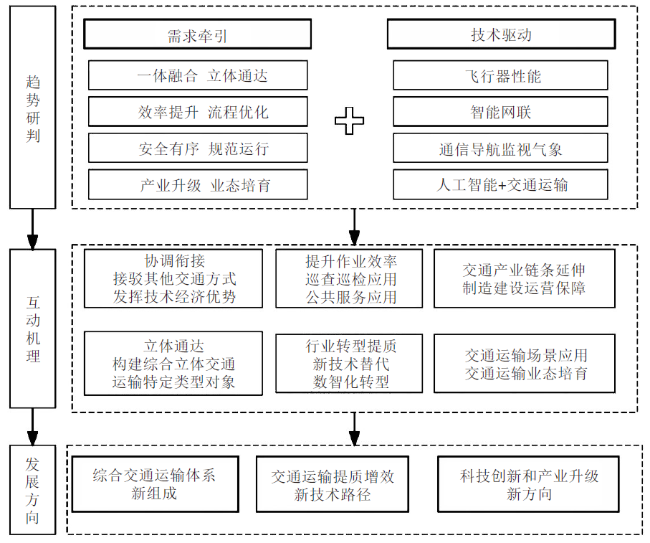
1)综合交通运输体系的新组成部分。作为一种新型运输方式,低空交通运输已成为国家综合立体交通网不可或缺的组成部分与关键增量。低空交通运输技术为传统交通运输的转型升级提供了创新路径,能够衍生出新型运输组织与服务模式。在物理层面,低空交通通过点对点直线飞行优势,有效弥补了地面交通在山地、水域、城市密集区等环境下的连通性短板,显著提升区域交通网络的整体韧性与覆盖广度。在功能层面,低空交通并非旨在替代既有运输方式,而是通过协同联动,共同构成陆空一体的综合立体交通运输体系,与地面交通形成互补。长途干线仍由高铁与民航承担,低空交通运输则聚焦都市圈内部、城际短途接驳以及末端物流配送等中短途场景,作为现有体系的重要补充与延伸,是构建智能、高效综合立体交通网的关键抓手。
2)综合交通运输转型发展的新技术手段。低空交通运输的本质是一套可嵌入现有运输体系并能系统性提升其效能的技术工具集群,不仅意味着运输方式的丰富,更是交通运输行业依托新技术实现业务流程重塑、模式创新的战略选择,是推动交通运输体系向更智能、更安全、更高效、更绿色方向转型的有效途径。在行业转型升级的过程中,低空技术能够深度融入传统的规划、建设、管理、养护、运营等各环节,更是交通运输行业推进“一体化融合、安全化提升、数智化升级、绿色化转型”整体发展背景下的重要技术手段,为行业整体提质增效与结构优化提供关键技术路径。
3)交通运输领域科技创新和产业升级的新方向。低空交通运输是新质生产力的典型代表,汇聚了航空制造、人工智能、5G/6G通信、高精度导航、新材料与新能源等一系列前沿技术的创新与应用。同时,它涵盖了飞行器研发制造、飞行保障系统(含起降场、通信导航监视设施)、运营服务、人员培训与后期维护等完整产业链条,为传统航空制造业、汽车工业、信息技术产业等提供了新的增长点与转型机遇,有助于形成规模化的产业集群与经济产出,打造经济增长新引擎。
4.3 低空交通运输发展的推进路径
发展低空交通运输,并非凭空构建一种全新的运输方式,而是围绕完善现代化综合交通运输体系,将公路、水路、铁路等地面交通资源与低空交通资源进行系统性统筹规划与协同利用,实现地面交通网络与低空资源的集约化共建、高效共享与一体化融合,其核心实现路径在于陆空设施协同一体、陆空管理协同一体、陆空服务协同一体、陆空产业协同一体,从而推动综合立体交通网络的功能互补与效能整合。推进低空交通运输高质量发展的思路、路径和对策框架如图2所示。
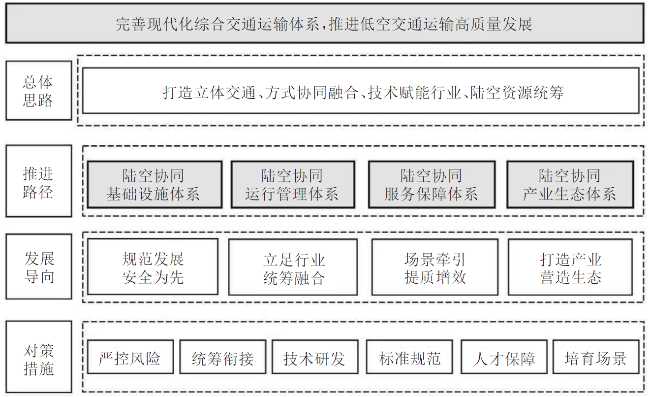


1)构建陆空协同基础设施体系。推动传统交通基础设施与低空设施的规划衔接与深度融合,构建多层一体的复合型基础设施网络。应依托并充分利用现有综合交通运输基础设施网络及运力资源,以提升全网运行效率为核心目标,以促进低空经济与综合交通运输体系深度融合为导向,通过基础设施的协同规划布局、运输服务的一体化衔接以及管理规则制度的统一创新,实现低空交通运输与公路、铁路、水路、城市交通等运输方式的高效协同与融合发展,最终构建覆盖陆海空、贯通多层次的一体化综合交通运输体系。
2)构建陆空协同运行管理体系。低空交通运输的高效与安全运行,高度依赖于通信、导航、监视等核心功能的系统整合与智能协同。需构建以群体智能感知与协同控制为特征的运行架构,通过统一的数据中台与智能决策系统,实现低空航空器与地面交通状态的实时交互联动,实现从航空器飞行控制到空域资源调配的协同管理,推动建立交通运输行业空域申请划设、航路航线规划、飞行管理规则等方面的高效工作机制、管理规则,确保在复杂环境中低空交通运输安全有序运行。为此,需深入研究低空立体交通的管理特点与需求,发展融合通信、立体导航、立体监视与立体管控于一体的技术体系与管理模式。
3)构建陆空协同服务保障体系。面向交通运输行业生产作业和客货运输的典型应用场景,构建一体化、网络化的陆空协同服务体系。应以统一的智能运营调度平台为核心,保障低空交通运输生产作业的安全高效,实现客货运输在不同运输方式间的无缝衔接与运输组织的高效协同。例如,在应急救援等特殊场景下,系统能够自动规划最优低空救援航线,并同步调度地面接驳与支援资源,建立“空中-地面”联动的快速响应通道,从而极大提升关键任务的执行效率与服务体系韧性。
4)构建陆空协同产业生态体系。培育和拓展多元化应用场景,构建开放协同的产业生态,是低空经济可持续发展的内在要求。应积极引导、规范并支持适用于交通运输行业的专用低空装备与核心技术的研发制造,为应用场景的拓展奠定坚实的产业基础,培育具有核心竞争力的龙头企业,延长和做强低空交通运输产业链。针对巡查巡检、物流运输、应急救援、文旅观光等重点应用场景与业态,分类施策,有序推动陆空协同运输新业态发展,培育一批低空交通运输领域的领军企业。同时,需加强宏观引导与规范,避免社会资源浪费、低水平同质化竞争及产业泡沫化现象,保障产业链健康、安全、可持续发展。
5 低空交通运输的发展导向和推进措施
5.1 发展导向
1)规范发展,安全为先。需要系统把握低空交通运输的运行特征与发展规律,将安全置于首要位置,加快建立完善的安全监管体制机制,明确各方职责边界。应全面识别低空交通运输在设施建设与运营、运输服务、人员管理及装备使用等环节的安全风险点,进一步厘清管理权责,强化部门协同,共同构建坚实的安全保障体系。
2)立足行业,统筹融合。应加强规划衔接,在综合交通运输体系及相关专项规划中,积极推动低空飞行与铁路、公路、水路等多种运输方式的有效对接。将低空交通运输设施建设与场景应用融入行业“一体化融合、安全化提升、数智化升级、绿色化转型”发展大局。通过统筹配置地面与空域资源,构建多层次、网络化的空天地协同交通廊道;合理规划低空起降设施与地面交通枢纽的协同布局,提升客货转运效率。
3)场景牵引,提质增效。充分发挥交通运输行业应用场景丰富、参与主体多元的优势,引导形成可持续、可推广的商业模式。应巩固并完善在物流配送、基础设施巡检、应急救援等领域的现有典型应用,持续拓展应用边界,鼓励运营模式创新与实践验证;积极培育低空干线物流、载人运输等新兴场景,通过试点示范推动成熟应用落地。
4)打造产业,营造生态。在深化应用推广的基础上,强化产业思维,系统绘制覆盖基础设施、装备制造、运营服务、飞行保障等全链条的低空经济产业图谱。针对产业链薄弱环节和缺失领域,加快培育、补齐短板,推动形成经济价值显著、社会效益突出、战略意义重要的低空交通运输产业体系。
5.2 推进措施
当前,我国低空交通发展已从概念探索期步入应用拓展期,需从严控风险、科技创新、标准规范、人才培养及示范应用等多维度协同发力,加快建设安全、高效、协同的低空交通运输体系。
1)严控风险,完善多元化安全保障体系。立足“管得住才能放得开”,加强“黑飞”监管和反制,建立事前、事中、事后的全链条管理体系,加强应急指挥管控,提升应急响应能力。针对低空交通运输典型场景,完善低空交通运输规则和低空飞行安全管理制度,提高低空交通运输公共安全管理水平。
2)统筹衔接,营造陆空协同的发展环境。在线路层面,依据《国家综合立体交通网规划纲要》要求,统筹综合交通通道资源,推动交通通道从“单一平面”向“综合立体”演进,积极构建低空立体交通廊道。在枢纽层面,推动既有交通场站、物流枢纽等设施兼容改造低空起降功能,高速公路服务区等场所可增设充电基础设施,形成“地面+低空”资源高效配置格局。加快建设低空通信、导航、监视、气象等设施,推进飞行管理服务保障体系建设,构建低空智能网联系统。
3)创新驱动,加强专业装备技术研发。充分发挥科技引领作用,以场景需求为牵引,以技术创新为基石,将低空交通运输纳入“人工智能+交通运输”总体工作部署,结合低空运输、生产作业等低空飞行场景,加强人工智能、云计算、边缘计算等先进技术应用。推动长航时、高性能、专用化航空器研发,重点突破飞行器技术、空域管控技术以及通信导航监视技术的瓶颈。强化科技创新平台与能力建设,布局实施重大创新应用工程,支撑构建陆空协同的智能立体交通网。
4)规范有序,完善标准与规范体系。完善低空交通运输管理规则规制,加快构建低空交通运输标准体系。制定完善设施、运营、导航、管控等方面的技术标准,明确特定场景和行业技术要求,填补基础设施、场景应用、数据互联等方面的标准空白。加强国际化衔接,积极参与全球低空标准制定,为我国低空交通运输“走出去”创造有利条件。
5)人才保障,培育多层次专业化人才队伍。低空经济的跨学科、复合型特征对人才知识结构提出了更高要求。当前,既懂航空技术又精通交通运输、人工智能、政策法规的跨界人才尤为紧缺。亟需构建多层次、专业化的人才培养体系,打通从理论创新到工程实践、产业应用的转化路径,全面提升行业人才队伍整体能力。
6)试点先行,分类培育低空交通运输应用场景。按照先载货后载人、先隔离后融合、先远郊后城区的原则,实施差异化、分类别的应用场景培育策略。有序推广技术相对成熟、基础较好的生产作业类场景应用;稳步试点探索物流配送等场景;审慎研究论证载人运输场景。着力打造一批安全保障有力、技术模式创新、运营可持续、经验可推广的示范项目,探索可持续商业模式,加强典型案例的投入产出分析和经验总结提炼,形成“示范引领、总结优化、推广应用”的良性发展机制。
6 结束语
本研究系统论证了在陆空协同视角下发展低空交通运输的必要性与可行性,构建了低空交通运输发展的理论框架,指出低空交通运输是在构建现代化综合立体交通网的战略下,通过深度融合与协同赋能,推动“设施-管理-服务-产业”四维陆空协同发展,成为交通网络从“平面”向“立体”拓展的关键增量,能够显著提升国土空间利用效率与综合交通运输体系整体效能。未来,随着低空飞行器性能持续提升、空域管理政策逐步开放、管理保障体系加快构建,低空交通运输将逐步从特定场景、区域性试点走向规模化、商业化运营,需要在安全监管、空域管理、技术装备、标准规范等方面持续发力,通过体制机制创新与技术应用突破,为完善现代化综合交通运输体系注入全新动能。