
0 引言
既有研究围绕高速公路服务区品质提升,已形成从基础功能完善到文化内涵挖掘的渐进式探索路径。早期研究主要关注物质空间和功能层面的优化:苏清华等[3]通过调查发现高速公路服务区普遍缺乏人文细节与植物地域性;史珂珂[4]提出高速公路主题服务区建筑“开放化、复合化、主题化、人性化”四步设计框架;张玲等[5]基于云南高速公路服务区发展特点,强调应推进市场化运营,推动服务区与地方旅游、农特产品等资源优势结合,以开放的思路实现资源优化配置。随着研究的深入,学者们开始从品牌与文化视角寻求突破:胡术[6]从品牌视角出发,强调地域文化基因的价值重构;李娅等[7]基于腾陇高速实证研究,发现服务区“重物质、轻精神”导致同质化,为通过文化赋能打破同质化困境提供了现实依据;云南交投集团以服务区改造提升项目为例,通过整合物联网与智能化技术,提升服务区基础设施功能与用户体验,推动服务区向“智慧化”和“美丽云南新名片”目标迈进[8]。近年来的研究呈现多维度整合和战略提升趋势:钟林[9]以龙江大桥服务区为例,提出功能—文化—体验—品牌四维更新策略;郭俊华等[10]则从铸牢中华民族共同体意识的高度,将服务区视觉形象工程提升至国家文化战略层面;田宇等[11]进一步引入“路衍经济”理念,指出服务区应作为交通与产业融合的关键载体,通过“硬件+软件”双向提质,激活区域资源并支撑可持续发展。
上述成果为服务区的文旅功能升级奠定了基础。然而,当聚焦于多民族文化传承与创新这一特定语境时,现有研究在系统性方面仍存在明显不足:①文化叙事往往停留于符号化呈现,缺乏贯穿“意义—场景—体验”的完整逻辑链条;②数字技术的应用多限于信息展示,与民族文化深度沉浸体验的结合尚浅;③商业运营模式与传统文化的价值转化路径较为单一,难以支撑可持续发展。
针对以上问题,本文提出了应用V字迭代模型、螺旋模型、底层逻辑四步模型等3种模型,结合情景分析法,对典型场景、面临的挑战进行探讨,并提出“十五五”时期多民族文化融入云南高速公路服务区文旅功能升级的实施路径,以期为云南及其他民族地区的高速公路服务区文旅功能升级提供可复制、可推广的策略参考。
1 多民族文化融入云南高速公路服务区文旅功能升级的模型构建与应用
1.1 V字迭代模型
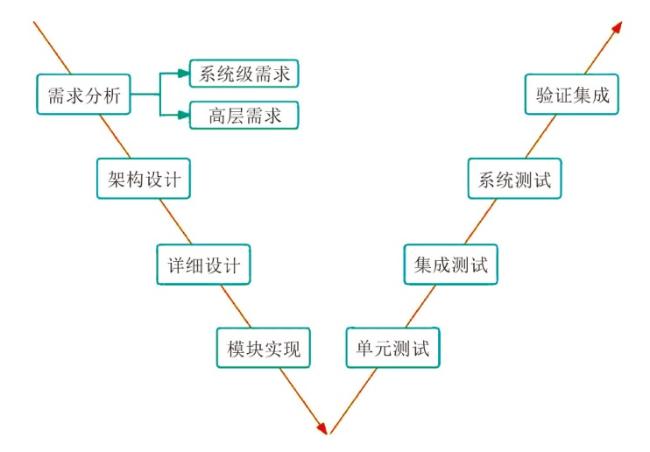
1)需求层级化分解与叙事动线设计
在系统级需求上,模型需要跳出“单点景区”思维,从云南省的民族分布与交通路网出发,设定总体“民族走廊”空间结构与叙事主题。在高层需求上,将宏观叙事转化为用户可感知的“迎宾—解释—互动—回味”四步行线,形成完整的循环叙事。
2)文化模块的“容器化”封装与实现
在确定需求后,模型进入架构设计与实现阶段。其应用核心在于创新地将核心文化IP切分成标准化“文化模块”,按照内容脚本、交互脚本、技术脚本等3种模式封装成“容器”。该设计下文化模块具有接口统一、时长可控的特点,使得文化内容能跨服务区节点复用组合、保证叙事连贯。
3)数据驱动的验证集成与迭代
V字迭代模型框架右侧的测试验证阶段与左侧的需求设计阶段构成严格的对应关系,形成一个质量保障体系。单元测试验证单个文化模块功能、性能与用户体验;集成测试则考察多个模块在叙事动线中的协同性与流畅度;系统测试是在真实运营环境中,对多源数据做融合分析,从系统层面评估整体效益(如停留时长、文化认知度)的达成度,数据经过验证后驱动下一轮的叙事优化。
1.2 螺旋模型
螺旋模型巧妙运用基于风险驱动迭代的理念,解决了服务区数字化体验深度不足的问题,将文化体验视为一个不断深化的认知过程,通过构建“目标设定—风险识别—原型开发—效果验证”的流程实现持续优化,使风险水平保持在一个可控的范围内,推动文化数字化体验持续向深度递进。该模型结构如图2所示。
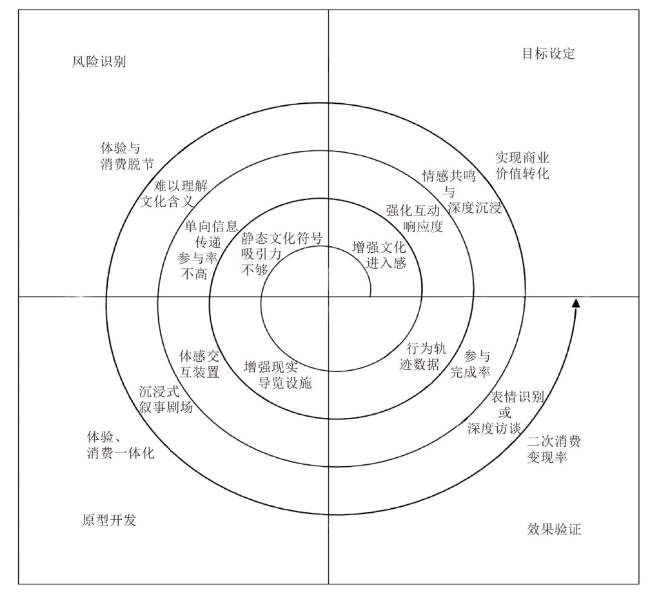
在实践中探索出该模型在服务区背景下的四幕应用,即起、承、转、合。每一幕的迭代以“目标设定、风险识别、原型开发、效果验证”逆时针方向循环演进。以下是该模型在服务区背景下的具体应用。
“起”阶段,以增强“文化进入感”为目标,其核心风险为“静态文化符号吸引力不够”。为此,可部署增强现实(Augmented Reality, AR)导览设施等交互原型,以行为轨迹数据(通过给游客发放含RFID芯片的手环、门票或卡片来记录数据)验证其吸引力。
“承”阶段,以强化“互动响应度”为目标,风险为“单向信息传递参与率不高”。在此阶段,可开发体感交互装置等原型,以参与完成率验证其应用效果。
“转”阶段,以达成“情感共鸣与深度沉浸”为目标,风险为“难以理解文化含义”。需要解决文化内涵因认知门槛过高而难以触达受众的问题,可打造沉浸式叙事剧场等原型载体,结合表情识别等情感分析方法或深度访谈,综合评估观众在情感与认知层面的共鸣程度。
“合”阶段,以实现“商业价值转化”为目标,风险是“体验与消费脱节”。可设计体验、消费一体化动线,贯穿沉浸式演艺与文创市集的体验,以二次消费变现率为核心衡量指标,验证文化价值向商业价值转化的成效。
以上每一阶段都是一个独立的迭代子单元,通过快速原型、多源验证(行为轨迹、满意度、消费等)、演化决策,确保体验质量从量变到质变的飞跃,将文化体验的抽象构建转化为可管理、可优化的系统工程。
1.3 底层逻辑四步模型
底层逻辑四步模型是用以破解服务区文化资源商业化单一问题,推动文化流量向商业“留量”转化,整体架构具备清晰的阶段,并具有明确的经济价值导向。如图3所示。
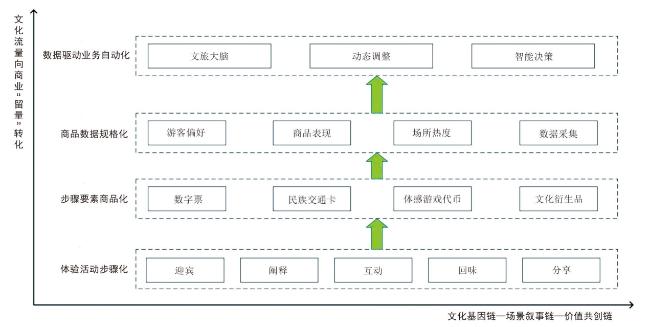


1)体验活动步骤化
从使用者行为、时间预算出发,将复杂的文化活动流程压缩为规范的“迎宾—阐释—互动—回味—分享”五段式动线,严格控制每段时长,以高度适配高速公路服务区客流的“短时高频”特征。
2)步骤要素商品化
通过在各体验环节精准植入消费触点,构建了“内容即商品”的转化路径。例如:在“迎宾”区,游客可借助AR合影技术生成具有纪念价值的数字票,或定制融入民族元素的交通卡;进入“互动”区域后,可以使用体感游戏代币参与非遗技艺体验,并直接购买对应的非遗材料包;在“回味”阶段,引导游客品尝当地美食并通过线上平台订购精选的文化衍生品。
3)商品数据规格化
该阶段旨在将分散的运营数据转化为战略性资产。通过对游客偏好、商品表现(动销率与溢价)及场所热度时空分布等维度的数据进行系统采集与标准化,从而深度挖掘数据价值,形成可驱动业务增长的战略性数据资产。
4)数据驱动业务自动化
依托“文旅大脑”(基于数据驱动的智慧文旅中枢平台)对多源数据进行融合分析,以智能决策结果指导商品、营销策略与体验内容的动态调整。例如:依据实时热力图重新规划消费区、根据动销数据优化库存结构或基于用户偏好实现数字内容的个性化推送。
1.4 模型比选与适用性分析
上述3种模型构成了一个应对不同升级(文旅功能升级)挑战的工具箱,其适用性取决于服务区的具体情境与战略目标。
V字迭代模型适用于文化资源富集、升级目标明确且追求叙事系统性的服务区。它能保障文化赋能的深度与严谨性,但对前期规划与流程控制能力要求较高。螺旋模型更适用于尚处于探索阶段、需快速响应市场或聚焦特定体验节点,实现创新突破的服务区。它在不确定环境中展现出高度的灵活性,但要求组织具备敏捷迭代的文化。底层逻辑四步模型是破解商业转化瓶颈的专有工具,尤其适用于亟需提升非租金收入的服务区。其核心价值在于构建一个可持续的商业生态,但对数据采集与运营能力有基础要求。
在实践中,服务区管理者可以采取模型组合策略。例如,以V字迭代模型奠定整体叙事骨架,在关键体验节点嵌入螺旋模型进行精细化处理,并全程辅以底层逻辑四步模型确保商业活力。这种协同应用模式,能系统性地实现文化赋能、体验升级与经济增效的多重目标,为云南省高速公路服务区向“民族文化会客厅”的战略转型提供理论支撑与实践路径。
2 多民族文化融入云南高速公路服务区文旅功能升级的典型场景分析
高速公路服务区文旅功能升级不仅涉及交通节点基础服务功能的提质增效,更肩负着在多民族文化语境下实现文化传承、体验深化与价值转化的特殊使命。本文基于前述理论模型,选取文化叙事整合、沉浸体验升级与商业价值转化等3个兼具普遍性与典型性的维度展开场景分析。
2.1 文化叙事整合——“彝白回走廊·楚雄服务区”
1)痛点问题
该服务区作为滇中民族文化走廊的关键节点,面临文化展示碎片化与叙事断裂化问题,导致游客文化认知浅表化,难以形成深度文化认同。
2)技术路径
引入V字迭代模型,以“需求分解—验证集成”为逻辑主线,系统构建连续文化叙事体系。在系统级需求层面,确立“彝白回多元共生”叙事主题,实现文化展示从“点状陈列”向“线性叙事”的转变。高层需求层面,设计“迎宾—阐释—互动—回味”四步动线,通过“火把图腾灯阵”、360°环幕影院、非遗工坊快闪体验及AR数字集市等模块化场景,实现文化认知的递进深化。
3)应用效果
试运营的3个月内成效显著,游客平均停留时长提升至47分钟,增幅达161%;文化认知度调研显示,游客对三大民族文化的辨识度提升至67%。文创销售额占比从7%增长至21%,彝族刺绣体验项目预约需提前2周。
2.2 沉浸体验升级——“傣佤景走廊·普洱服务区”
1)痛点问题
该服务区文化体验存在“静态化”与“浅层化”问题,传统演艺活动参与度低,难以形成深度沉浸与文化共鸣。
2)技术路径
运用螺旋模型的迭代机制,通过“目标设定—风险识别—原型开发—效果验证”的循环,分阶段构建沉浸式演艺体系。从文化符号的动态激活,到参与式演艺的构建,再到多模态语言渗透与体验—消费环节的形成,每一迭代阶段均针对特定风险进行原型优化与数据验证,实现体验质量的持续提升。
3)应用成效
经过四轮迭代优化,服务区夜间客流占比提升至38%,文化参与度(以互动动作完成率计)达到91%。技术验证数据显示,语音识别准确率稳定在92%,外籍游客文化认知测试平均分达到82分。演艺相关二次消费转化率提升至23%。
2.3 商业价值转化——“哈尼瑶走廊·元江服务区”
1)痛点问题
该服务区文化资源与商业转化脱节,特色文化未能有效赋能商业运营,导致经济价值尚未充分释放。
2)技术路径
应用底层逻辑四步模型,构建“体验活动步骤化—步骤要素商品化—商品数据规格化—数据驱动业务自动化”的商业价值转化。通过将文化活动解构为标准化动线,植入多元化消费触点,并依托数据驱动实现运营策略的动态调优,形成文化价值向经济价值高效转化的良性循环。
3)应用成效
2024年十一黄金周,服务区人均消费从26元提升至61元,增幅达135%。其中,梯田主题文创产品销售额突破120万元,有效带动周边23户农户实现户均增收1.2万元。同期监测数据表明,商品动销率提升42%,游客复购率增长28%。
3 多民族文化融入云南高速公路服务区文旅功能面临的挑战
在交通强国、文旅融合与铸牢中华民族共同体意识战略背景下,云南省高速公路服务区文旅功能升级面临的发展机遇与挑战并存,下面运用PESTEL模型进行宏观环境分析。PESTEL是一种宏观环境分析工具,从政治(Political)、经济(Economic)、社会(Sociocultural)、技术(Technological)、环境(Environmental)、法律(Legal)等6个维度对一个组织外部的宏观影响因素进行系统识别和分析。
1)政治维度:跨境叙事与舆论风险
云南邻近老挝和越南,跨境服务区叙事需审慎处理,否则可能会被境外舆论曲解为“文化扩张”;跨境叙事项目涉及交通部门、旅游部门、民族宗教事务部门、数据局、外办等部门的审批,周期较长易延误节庆活动。此外,随着民族团结进步示范区考核指标政策变动,已开发的跨境文化IP可能面临二轮合规整改。建议建立跨境叙事跨部门协调机制和动态管理机制,尊重当地文化,审慎处理历史叙事,预判政策动向等,增强国家形象塑造的严肃性、灵活性和主动性。
2)经济维度:投入产出周期的结构性失衡
跨境服务区数字化改造前期投入大,后期收益见效慢。跨境服务区数字化转型需要在设施、数字内容、运营平台等方面进行改造建设,其投资规模远高于即期收益。而当前服务区的收入主要依赖传统业态,难以支撑后续长期维护和开发的需要,缺乏对投资和人才的吸引力。此外,文化资产缺乏衡量标准,无金融化渠道。缺乏新的投融资手段和长效的运营模式,如何解决投入产出问题是当前跨境服务区数字化发展面临的首要问题。
3)社会维度:多元主体与跨文化认知差异
文本转译面临多重主体互动及异域文化语境的困境。浅层次困境是符号转译中的文化扁平化,导致文化流失、文化身份消解;更深层次困境是核心文化群体与新兴技术之间的割裂,导致文化文本的生产端与理解端出现双向断层。而异域文化语境中的受众理解语境的偏差,导致文化文本意义的流失。其背后是复杂的、多重主体的互动,传统、新传播思维与异域文化语境之间,需要通过多主体参与和多重转译来避免跨语境传播过程中文化文本的耗散风险。
4)技术维度:系统协同、资源适配与架构开放失调
技术赋能文化数字化的过程中限制因素众多。其中,最大的挑战是数据与参与主体的复杂性、标准的多样性导致形成无法对接的“数据烟囱”,造成文化基因库数据资源无法有效整合;其次,算力支撑不足,特别是在跨境场景上无法充分实现优质内容的传输和体验;再次,也是更为复杂的问题,是硬件成本与内容供给的失衡,因缺乏可持续更新的优质内容而难以发挥价值。上述问题本质上反映了封闭的技术系统与开放的业务生态之间的冲突,需要通过构建开放的技术生态、统一标准、整合算力,从而实现从技术单点应用向系统级能力建设的扩展。
5)环境维度:生态保护与绿色转型的平衡挑战
生态保护和低碳发展是项目的双重环境限制因素,不仅是设施的营建方式受生态线限制,处理难度及建设成本较高,而且在碳达峰碳中和目标下绿色设施的建造回收周期较长,导致项目建设的经济成本较高。此外,更深层次的问题在于外溢的跨境旅游交通碳排放与低碳示范区品牌建设之间的矛盾。因此,在项目开展前期,须同步考虑生态效益、经济效益及品牌价值,在严格的环境约束条件下寻求项目建设的最佳平衡点。
6)法律维度:数据主权与知识产权双重合规
文化数字化存在着数据产权与知识产权保护的困境。跨境服务中游客信息数据本地化保存与跨境服务多语种平台运营之间存在政策不兼容,带来合规性方面的挑战。同时,因非遗数字化难度大、传承人群复杂、产权复杂等特点,易出现知识产权纠纷。此外,非遗文化跨境叙事也缺乏区域审查,在区域宗教历史故事等文化叙事的分享中存在政策风险。文化数字化需要将数据保护、产权保护与文化叙事共享相结合,以确保文化数字化资产的流通与变现。
4 多民族文化融入云南高速公路服务区文旅功能升级的实施路径
4.1 构建全域文化叙事协同机制
跨地区、跨主体的联动机制是避免区域文化叙事碎片化、打造民族走廊连续性的内在要求。这要求在叙事顶层设计、生态共建、链路打通等3个层面同时发力。
1)叙事顶层设计
省级文旅、交通、民族宗教事务部门加强顶层设计,制定高速公路服务区多民族文化叙事指导原则,明确多民族文化“多元一体”叙事总纲、阶段目标与实施责任主体,依据滇中、滇西、滇南3条民族走廊的文化特征设定差异化叙事主题,避免各服务区文化展示同质化,推动文化资源布局的分级、分域。同时,将服务区文化叙事纳入“省级非物质文化遗产保护与创新行动计划”,推动“点状文化展示”向“区域文化网络化”发展。
2)生态共建
搭建“政府—企业—传承人—高校—社区”大数据平台,整合非遗资源数据、客流数据、商业数据。确立文化基因授权规则和利益规则,规范文化数据采集、编码、应用、反馈环节,促进文化资源在各主体间流动、增值。在人工智能和大数据技术的支撑下,动态监测、评估故事讲述效果,推动叙事从“静态存在”走向“动态生成”。
3)链路打通
以游客的动线为轴展开文化叙事与场景营造。打破以民族为点的静态展示方式,设计“迎宾—阐释—互动—回味”四幕动线,实现文化认知的螺旋式上升。加强实景与虚拟实景数据对接,弥合碎片化文化叙事的裂隙,形成“线下体验—线上延伸—传播推广”的方式,使服务区成为民族文化的“行走课堂”。
4.2 健全文化数字化标准体系
构建完善的文化数字化标准体系是高质量地实现多民族文化融入服务区的前提,有利于保障文化内容的正确性、技术通用性和国际影响力。“十五五”期间,应当从内容标准、技术规范、评价体系三方面建设标准体系。
1)内容标准
应加快建设民族文化遗产数据采集与编码标准,形成覆盖非物质文化遗产、图腾元素、方言等元素的数据采集规范、编码格式及元数据标准要求。针对增强现实/虚拟现实(AR/VR)场景、数字藏品、多语解说等建立内容审核机制、内容版权保护机制,确保文化内容表达的权威性与规范性。同时,建议建立文化转换效果指数(如文化知晓率、停留率、回购率),用于项目评估。
2)技术规范
统一服务区物联网终端、物联网边缘计算节点、省文化基因库的接口,融合数据。强化AR/VR导览、沉浸式演艺、数字孪生等关键技术场景及数据标准,消除“数据烟囱”“体验割裂”。加强与东南亚国家文化数字化标准互认,消除文化跨境传播中的技术壁垒。
3)评价体系
构建“文化—经济—社会”三维综合评价指标体系,增加“中华民族共同体意识认同度”“非遗活化率”“跨境游客满意度”等指标。该体系应实现常态化评估、动态化调整,以确保评价标准始终契合技术发展趋势,为服务区文旅融合的高质量发展提供持续、科学的规范指引。
4.3 精准配置文化运营资源
从服务区区位特点与资源优势着手加强投入与产出的平衡,是保障项目可持续发展的关键。按照战略分层、资源整合、节奏把控三方面的要求强化文化投入。
1)战略分层
构建基于服务区客流规模、民族资源密度与资源定位的综合评价体系,将服务区划分为旗舰型、区域型、基础型,实施分类指导。其中,旗舰型服务区以全流程和沉浸式体验为主轴展开叙事,区域型服务区以IP提炼为主要抓手,基础型服务区勿简单地进行文化模块复制,避免资源重复开发和投入。
2)资源整合
统筹“文化IP—商业—技术”要素配置,建立民族IP价值评估及孵化基金,引入社会资本参与非遗匠坊、数字藏品等产业开发,借助政企合作、文旅投资信托基金等方式,降低项目启动成本,提升资源利用效率。推动传承人与技术团队的对接,补足文化数字化缺口。
3)节奏把控
采用“试点—推广—迭代”的阶梯式推进模式。首先在3条民族走廊的示范服务区进行试点,每实施一轮,根据用户数量、商户数量进行成效评估,动态调整内容、经营方向,小步快跑、迭代更新,降低项目风险,实现文化赋能与经济效益的螺旋式上升。
4.4 构建文化安全保障与伦理风险防控体系
提高文化输出的安全性、合规性和伦理意识,是多民族文化进入服务区的必要条件。因此,要打造涵盖文化解读安全、数据隐私与跨境合规、知识产权保护的全流程风险管控机制。
1)文化解读安全
制定民族符号、历史典故、宗教符号审查规范,杜绝曲解文化、乱搭文化。组建民族文化研究专家、非遗传承人、其他相关领域学者等组成的审查委员会,对服务区文化事项进行事前审查、事中把关,确保文化内容符合“多元一体”的国家叙事。
2)数据隐私与跨境合规
严格遵守数据安全和个人信息保护相关法律法规,做好游客生物信息、行为轨迹等信息采集和保管工作,建立跨境游客多语种隐私协议,开展数据出境安全评估等工作,规避国际数据主权争议,探索面向境外游客开放共享的南亚东南亚文化“沙箱”。
3)知识产权保护
完善非遗数字化版权登记、授权,厘清社区、传承人、企业等在IP开发中的利益关系,通过区块链进行文化溯源取证,避免纠纷侵权,使文化具有持久的生命力。
4.5 打造复合型文化运营人才体系
解决“懂文化的不懂技术,懂技术的不懂文化”的人才问题,是提升服务区文旅功能建设的关键支撑。需要通过培养机制、引进渠道、激励政策三方面构建人才机制。
1)培养机制
鼓励学校开设“民族文化数字化”的双轨课程,联合企业共建人才培养体系。针对服务区的从业人员,开展“数字素养+民族知识”培训,提升文化翻译水平。加大非遗传承人的数字化装备培训,降低文化翻译成本。
2)引进渠道
面对文化科技复合型人才的短缺,以云南省文旅人才引进计划为引领,重点引进文化科技复合型人才。同时,深化校企合作,重点加强对非遗传承人的数字化知识与技术培训,降低文化转化门槛。
3)激励政策
通过设立“民族文化创新奖”,对在叙事方案、技术应用、商业转化等方面有特别贡献的团队进行物质、精神奖励,激活人才文化赋能的内在驱动力,真正做到“引得来,留得住,用得好”。
5 结论
针对目前云南高速公路服务区面临的文化叙事碎片化、数字化体验深度不足、商业转化单一三大痛点,本文围绕多民族文化与云南高速公路服务区文旅功能建设的相关理论、经典场景、存在的问题与实施路径进行了研讨,得出以下结论。
1)多民族文化融入的高速公路服务区文旅功能升级参考模型中,V字迭代模型适用于连续叙事规划,螺旋模型多用于沉浸体验迭代,底层逻辑四步模型适用于文化流量转商业“留量”。3种模型各具特点与适用场景。
2)在交通强国、文旅融合与铸牢中华民族共同体意识等国家战略背景下,须具备前瞻意识,妥善应对跨境话语权博弈、周期性投入—产出失衡、多元主体与文化认知冲突等潜在风险。
3)从构建全域文化叙事协同机制、健全文化数字化标准体系、精准配置文化运营资源、构建文化安全与伦理风险防控体系、打造复合型文化运营人才体系等5个维度,提出多民族文化融入云南高速公路服务区文旅功能升级的实施路径,为民族地区高速公路服务区文旅功能升级提供借鉴和参考。
后续研究可拓展至更广泛的文旅融合场景,并加强与社会学、经济学、文化学等学科的交叉融合,进一步深化理论建构,丰富实证内容。