
0 引言
道路交通系统是一个由人、车、路构成的动态系统,这三者中“人”是交通活动的主体,其行为影响交通系统中各项措施的实施效果,因此驾驶员出行路径决策研究是道路交通系统研究的重要内容[1]。在网联环境下,驾驶员做出行决策时有两个选择:一是遵从路网管理者给出的系统最优服务策略,二是利用自身的经验和习惯作出个性化决策。由于路网管理者和驾驶员的目标不同,所以系统最优服务策略与驾驶员个性化选择之间可能会产生一定冲突。在考虑道路交通系统最优决策的前提下,充分考虑不同个性驾驶员的接受程度,对二者之间的博弈协商机制进行研究和设计具有一定的理论意义与应用价值。
近年来,5G、人工智能、边缘计算等前沿技术的快速发展,加速推动了交通行业的智能化和网联化变革。许多研究表明,网联车系统在应对交通拥堵和交通安全等问题上具有很大潜力[2],越来越多的国内外学者开始对网联环境下交通路径选择问题进行研究。一些研究从交通出行者角度出发,运用多种理论(如预期效用理论、前景理论和后悔理论),分析出行路径的选择行为[3⇓⇓-6]。还有一些研究从路网管理者角度出发,通过交通流诱导技术将交通流向饱和度较低的路段引导分流[7⇓-9],并通过交通控制技术对路网中信号控制方案进行优化[10⇓-12],以达到缓解交通拥堵的目的。虽然以上研究在提升交通网络效率以及减少出行者出行时间上都作出了很大贡献,但并未考虑到交通出行者与路网管理者的交互与均衡,还存在很大的完善空间。
现有的出行路径选择研究多从单一群体角度出发,并且对驾驶员的个性考虑不足。新手驾驶员与熟练驾驶员,以及保守型驾驶员与激进型驾驶员对路网络管理者建议的出行路径策略的接受程度存在差异,驾驶员的个性化使得交通系统日益复杂化[25]。与此同时,随着车联网技术与交通领域的深度融合,如何在路网交通量均衡配置的前提下满足出行者个性化的信息服务需求已经成为一个亟待解决的问题。因此,本研究以分布式协同控制为视角,利用智能体的自治性与学习性以及多智能体之间的交互性,充分考虑驾驶员个性化因素,提出路网管理者与驾驶员的博弈协商机制。为验证这一机制的有效性,本研究将利用Net-Logo多智能体仿真软件,搭建网联交通系统仿真平台,并开展仿真分析。
1 问题描述
本研究考虑驾驶员个性化策略与路网管理者系统最优策略博弈协商下的驾驶员出行路径选择问题,目的在于保证路网运行效率的同时,改善驾驶员的出行体验。同时,利用多智能体建模技术对驾驶员、信息发布单元以及路网管理者建立多智能体仿真模型,以模拟网联环境下交通系统的动态交互机制。
1.1 多智能体交通系统解构
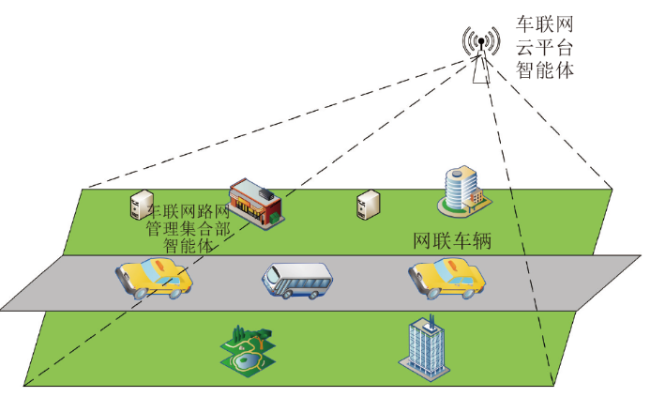
分布式人工智能主要研究在逻辑上或物理上分散的智能体系统如何并行地、相互协作地实现问题求解。多智能体系统是分布式人工智能的一个重要分支。如果说模拟人是单智能体的目标,那么模拟人类社会则是多智能体系统的最终目标[26]。多种智能体相互影响、相互作用,通过信息流通、博弈和交流等方式实现单个智能体不能实现的任务目标。车联网环境下的三个系统为车联网云端处理系统(“云”)、车联网道路监测管理系统(“管”)和网联车辆系统(“端”)。本研究将车联网环境下的“云”“管”“端”三个系统设置成三个智能体模型,即车联网信息云平台智能体、车联网路网管理集合部智能体和网联车辆驾驶员智能体。
车联网信息云平台智能体属于云端系统,它只需要与路网环境交流,得到对应的路网信息,并将路网信息传送给车联网路网管理集合部智能体与网联车辆驾驶员智能体供其决策。车联网路网管理集合部智能体与网联车辆驾驶员智能体进行决策时,其决策目标存在差异,导致了二者决策结果可能会产生一定冲突。因此,车联网路网管理集合部智能体与网联车辆驾驶员智能体之间需要制定一个博弈协商机制进行信息交互,进而决策出两者都可以接受的交通行为策略。最后,网联车辆驾驶员智能体作为宏观交通流的微观组成部分,执行既定交通行为策略,并最终组成宏观交通流行为,再由车联网信息云平台智能体感知当前路网信息。如此循环往复,三种智能体在不断地学习、作用、进步。网联环境下多智能体交通系统如图1 所示。
1.2 个性化出行界定
在网联环境下,当系统最优决策与网联车辆驾驶员个性化决策发生冲突时,不同驾驶员对于系统最优决策的接受程度存在一定差异。本文将这种对系统最优决策的不同接受度定义为“驾驶员个性化”。当驾驶员对系统最优的认知高于对个体最优的认知时,或者驾驶员习惯采用辅助设备导航时,通常会选择按系统最优路径行驶,该类驾驶员被定义为无个性驾驶员;而当驾驶员对自身驾驶最优路径的认知高于对系统给出的方案的认知时,或者驾驶员习惯根据驾驶经验选择出行路径时,这类驾驶员被定义为个性化驾驶员。
2 路径选择模型及博弈协商机制
2.1 车辆行驶模型
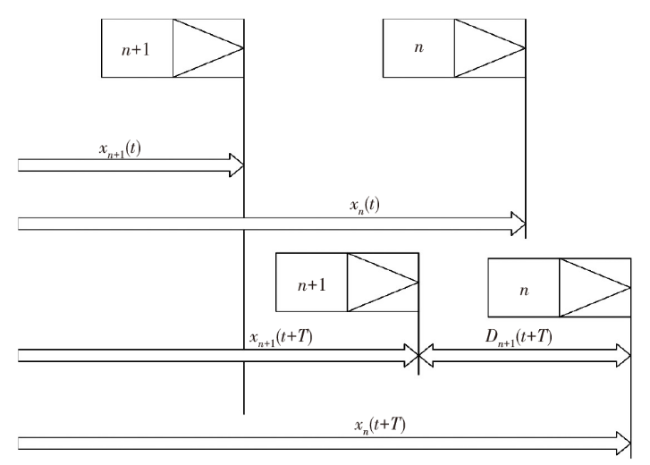
在车辆实际行驶过程中,由于同一车道相邻两辆车之间存在相互作用关系,车辆之间产生了“跟驰”现象。本研究采用经典的跟驰模型[27]来描述这一现象,如式(1)所示:
式(1)中: 为 时刻第n+1辆车的加速度(m/s2); 为 时刻第n+1辆车的速度(m/s); 为t时刻第n辆车与第n+1辆车之间的速度差(m/s); 为t时刻第n辆车与第n+1辆车之间的距离(m);T为驾驶员智能体面对各种情况的反应时间(s); , m, l为跟驰模型中的参数。
跟驰模型(如图2 所示)在仿真中具体体现为:在仿真平台上为车辆设定一系列的加速度和减速度,然后令每辆车在每个时刻都检测自己前一个位置是否存在其他车辆。如果存在,则令车辆减速行驶;如果不存在,则令车辆加速行驶,直至达到路网的最高限速。
2.2 车辆路径决策模型
本研究基于效用理论计算可选路径效用值,路网管理者与驾驶员基于效用最大化的原则选择最优出行路径。路径效用函数的构建遵从以下基本假设:
(1)理性的驾驶员。驾驶员会选择对于自身而言效用值最大的路径出行。
(2)路径的效用与其服务属性存在线性关系。驾驶员与路网管理者选择路径的效用值与其可提供的服务呈线性相关,并可用量化的线性组合函数表示。
(3)交通信息全掌握。在车联网环境下,驾驶员能够获得实时的路网信息,以便随时作出对自身有利的决策。
为了量化路网管理者和驾驶员选择不同路径时所获得的效用,本研究构建了路径选择行为的评价指标函数。根据相关研究,本研究主要选取行程时间fr1(t),起讫点区间距离fr2(D),起讫点区间交叉口数量fr3(i),路径饱和度fr4(V/C)和路段速度比率fr5(v/vf)五项评价指标函数进行评价,其中,V和C分别为每条路段的交通量(veh)和通行能力(veh);v和vf分别为每条路段的平均速度(m/s)和自由流速度(m/s)。驾驶员所选路径的效用值与路径的行程时间、起讫点区间距离、起讫点区间交叉口数量、路径饱和度的评价指标函数值呈负相关关系,而与路段速度比率的评价指标函数值呈正相关关系。第r条路径的第g项评价指标的满意度用drg=F(frg) [24]表示。
正相关效益的满意度函数如式(2)所示:
负相关效益的满意度函数如式(3)所示:
式(2)~ 式(3)中:R为可行路径集; 为第r条路径的第g项评价指标的检测值; 为第r条路径的第g项评价指标的最大满意值; 为第r条路径的第g项评价指标的最小满意值。本研究使用的驾驶员模型与路网管理者模型的路径信息权重及其变化范围如表1 所示[24]。
表1 路径信息权重及其变化范围 |
| 效用评价指标 | 路网管理者 智能体 | 网联车辆驾驶员 智能体 |
|---|---|---|
| 行程时间 | 0 | 0.40±0.10 |
| 起讫点区间距离 | 0 | 0.15±0.05 |
| 起讫点区间交叉口数量 | 0 | 0.10±0.05 |
| 路径饱和度 | 0.55±0.10 | 0.15±0.10 |
| 路段速度比率 | 0.45±0.05 | 0.20±0.10 |
本研究采用线性归一化加权效用函数来评估智能体感知路径的性能,如式(4)所示:
其中:
式(4)~ 式(5)中:Upr为第p个智能体选择的第r条路径的效用值; 为第g个评价指标的权重;P为智能体集合。
2.3 博弈协商机制
建立协商机制要兼顾车联网环境下的三个构成要素,即云系统(交通路网信息平台)、端系统(联网车辆及驾驶员)和管系统(交通路网管理系统)。博弈协商机制设于端系统和管系统之间,其具体流程如图3 所示。
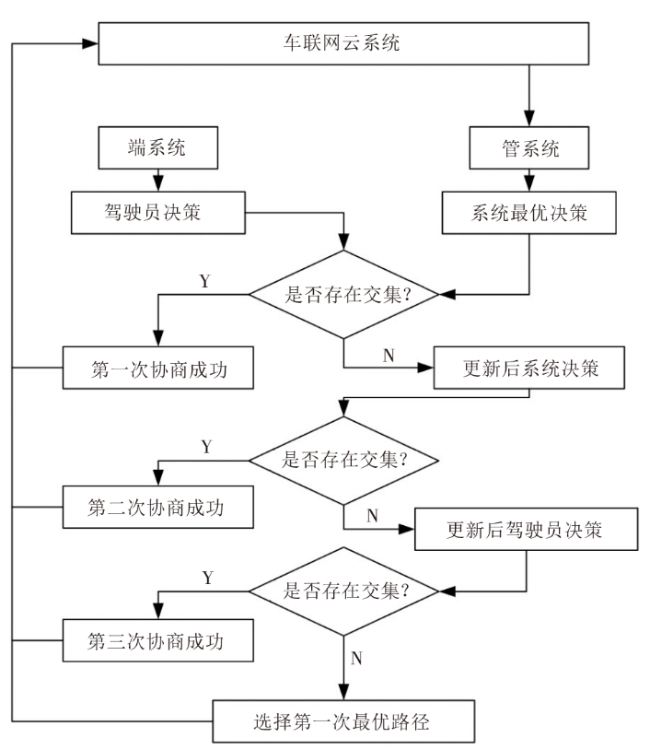
本研究通过三次博弈过程使路网管理者与驾驶员充分交流,使协商结果基本达到双方对其权重范围内最优路径计算的要求。路网系统最优决策与驾驶员个性化出行决策的博弈协商机制具体如下。
(1)管系统与端系统根据车联网云系统提供的实时动态路网信息,依据最优效用理论和自身对于相关权重的计算,在系统中获得符合它们自身效益的优选路径集合。首先,由管系统向端系统提供一个优选路径集合,端系统中的驾驶员鉴于其接受个性,会选择接受建议或者进入博弈协商过程。如果端系统中的驾驶员属于无个性化驾驶员,那么该驾驶员会选择执行管系统提供的优选路径集合中路径效用值最高的一条路径;如果该驾驶员属于个性化驾驶员,那么管系统和端系统进入第一次博弈过程,需要比较由管系统和端系统分别提出的优选路径集合。如果两个优选路径集合存在相同的路径,那么该驾驶员选择此路径出行,并形成宏观交通系统中微观交通行为的一部分,影响其他进入路网车辆的决策;如果两个优选路径集合不存在相同的路径,那么就进入第二次博弈过程。
(2)在第二次博弈过程开始之前,管系统需要调整其选择优选路径集的权重,但权重变化值不应该超过自身的调整阈值。根据调整后的权重重新计算得出新的符合管系统自身效益的优选路径集合,将其再次提交给端系统,管系统和端系统进行第二次博弈。如果两个优选路径集合存在相同的路径,那么该驾驶员选择此路径出行,则视为博弈协商成功;反之,管系统和端系统需要进行第三次博弈。
(3)在第三次博弈过程开始前,端系统中的驾驶员需要调整自身对出行路径选择的权重大小,并计算得出新的符合端系统中驾驶员自身效益的优选路径集合,将其提交给管系统,管系统和端系统进行第三次博弈。如果两个优选路径集合存在相同的路径,那么该驾驶员选择此路径出行,则视为博弈协商成功;反之,视为协商失败,系统强制端系统中的驾驶员接受第一次博弈过程提供的效用值最高的优选路径作为行驶路径。
博弈协商机制框架设定时需要注意两个关键的参数:调整阈值与路径集阈值。调整阈值与权重变更、调整相关,由于协商过程中需要多次计算优选路径集合,而相邻两次计算得到的路径集合不能完全相同,那么计算路径效用值函数的权重需要存在一定大小的阈值,使得重新计算优选路径集合时计算权重存在一定可搜索、可调整的区域,为多次计算不完全重复优选路径集合打下良好基础。路径集阈值代表优选路径集合中元素的数量。对于无个性驾驶员,路网管理者只需要提供给此类驾驶员一条效用值最高的路径,即路径集阈值为1;当路网管理者向个性化驾驶员提供优选路径集合时,则需要提供多条路径,本次仿真实验设定该路径集阈值为2,即路网管理者提供给个性化驾驶员的优选路径集合中包含路网管理者计算所得到的具有效用值最大的两条路径。
3 仿真案例分析
3.1 仿真环境设定
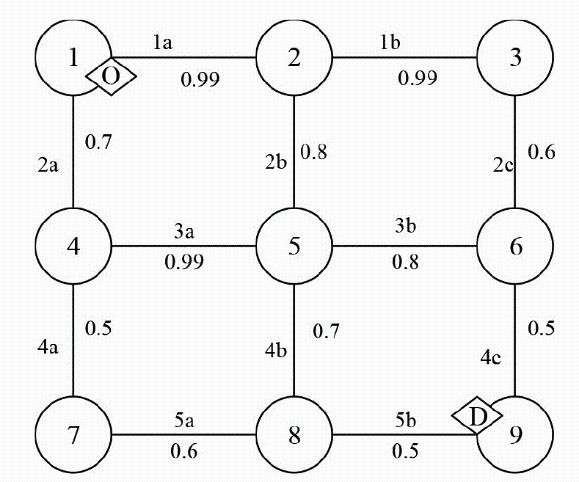
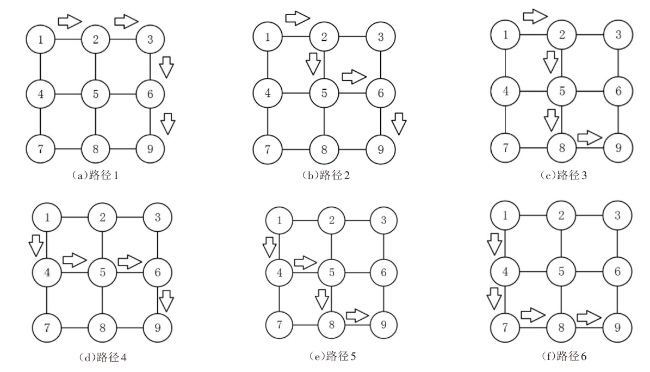
本研究基于Net-Logo多智能体仿真软件,搭建了网联交通系统仿真平台,将软件中的观察者、瓦片集与海龟集三种系统分别对应车联网环境的云、管、端系统。观察者发布系统指令,瓦片集划分为路段与环境,海龟集作为车辆驾驶员终端来执行仿真任务。仿真路网采用“田”字格路网,该路网包括9个节点和12个路段。为了区分不同路段的属性,为每个路段命名。同时,考虑路段的通行能力差异,为每条路段设计了一个车辆行驶速度上限。最终设计出的路网如图4 所示。选取左上角节点1和右下角节点9分别作为出行起讫点,并生成6条可行路径,如图5 所示。T, , m, l分别取值为1.2, 4, 0, 1[28],在第一次博弈时,路网管理者和网联车辆驾驶员每项效用评价指标的权重取表1 的原始值,在第二次和第三次博弈时其权重在变化范围内随机取值,同时要满足式(5)。在仿真时,本研究将现实世界中的时间和距离单位转换为Net-Logo仿真平台的时间和距离单位。
3.2 仿真实验设计
本研究采用不同路网饱和度以及不同类型驾驶员比例进行对比仿真实验,以获得不同情景下的仿真结果。为了保证实验结果的准确性,对每种情景进行10次仿真实验,并取其实验结果的平均值作为最终实验结果。综合分析得出了本研究所提出的博弈协商机制在不同路网饱和度以及不同类型驾驶员比例下对驾驶员出行路径决策以及路网整体运行性能的影响。
首先是路网饱和度信息。路网饱和度信息能够全面考虑路网的整体状态,是协商机制实施效果的一个重要评价指标。本文设置了0.2, 0.4, 0.6, 0.8和1.0等5种不同的路网饱和度,并在保持不同类型驾驶员比例不变的情况下调整路网饱和度,得到车联网环境中使用该协商机制时的路网信息。在设定的Net-Logo仿真模型中,控制仿真环境中路网饱和度信息的手段是调节来车率,即在程序中控制生成车辆的比率。程序中采用的生成车辆的方法是概率生成法。调高车辆“海龟集”生成的概率,路网饱和度增大;反之,则路网饱和度减小。
其次是不同类型驾驶员比例信息。不同类型驾驶员比例信息是在路网管理集合部智能体给出系统最优路径规划过程中,选择接受服务与选择协商服务的驾驶员所占比例。这一比例与驾驶员的心理、驾驶习惯、社会习惯相关。本研究设置了20%, 40%, 60%, 80%, 100%五种不同的个性化驾驶员占比进行实验,并用以分析、评价本次实验所建立的协商机制。在Net-Logo仿真模型中,“海龟集”代表网联车辆驾驶员智能体,“海龟变量”的数值0和1分别代表个性化驾驶员和无个性化驾驶员。
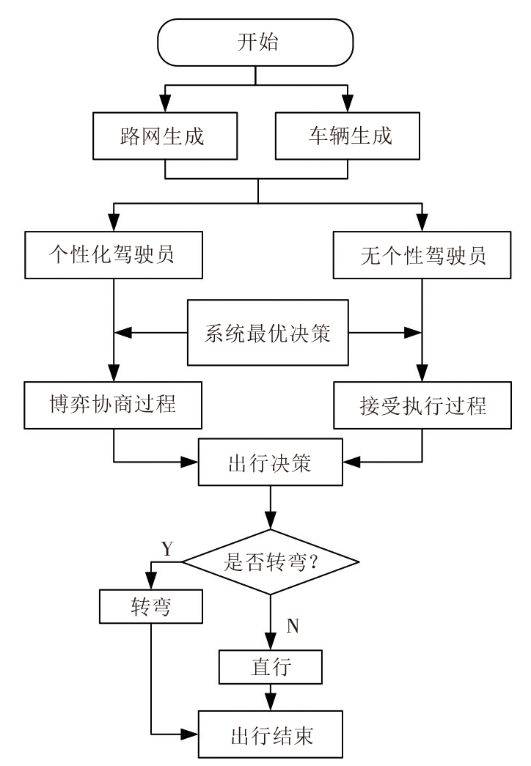
本研究中,仿真系统运行流程如图6 所示,具体步骤如下:
第一步:依据一定的来车率生成车辆智能体,并在车辆智能体进入路网时按照设定的不同类型驾驶员比例对其进行个性化与无个性的标定。
第二步:车联网环境下的运行系统直接提取路网内的数据并根据式(4)分别生成驾驶员的个性化路径集合与路网管理者的系统最优路径集合。若为无个性驾驶员,驾驶员直接接受路网管理者提供的系统最优路径;若为个性化驾驶员,驾驶员执行两者博弈协商之后的决策。
第三步:仿真系统运行时,规定车辆智能体的行为规则:直行与转弯。直行,需要满足车辆跟驰理论;转弯,则需要依据车辆所选路径,在抵达交叉口或者转弯点时判断下一点方向,并进行转弯操作。仿真路网的路径设定是由一系列节点的组合所确定的,在程序中表现为一个数组。因此,转弯规则的实现首先需要定义一个步数,即车辆在运行过程中所处的路径数组位置,以此判断经过的转弯判定点与即将到来的转弯判定点;其次,需要对来车方向和下一个转弯节点进行判断,以此决定车辆在本转弯判定点是否需要转向或者转向的角度。
第四步:若车辆智能体抵达终点,则完成出行。
3.3 仿真结果分析
为验证前文所提出的博弈协商过程的适用性,本研究在Net-Logo仿真环境中设定了不同的路网饱和度与个性化驾驶员比例进行多组仿真实验。采用1001~1200个仿真时刻数据对路径行程时间进行分析,并采用第1 800个仿真时刻的数据对博弈协商过程进行了接受度分析。
(1)不同路径行程时间分析
路网饱和度为0.2, 0.4, 0.6, 0.8, 1.0时,分别调节个性化驾驶员占比,测出6条路径在1001~1200个仿真时刻的路径行程时间。其中,路网饱和度为0.2和0.8时,每条路径的行程时间如图7 和图8 所示,tick是Net-Logo仿真软件的时间测量单位。
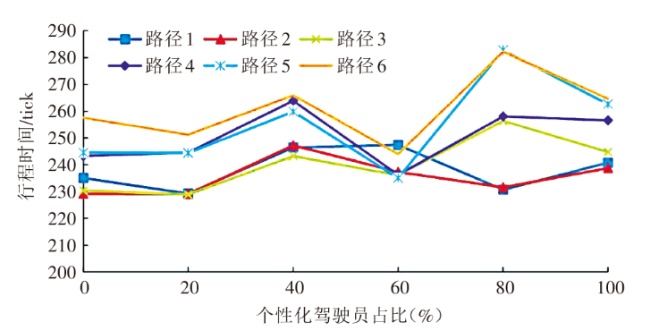
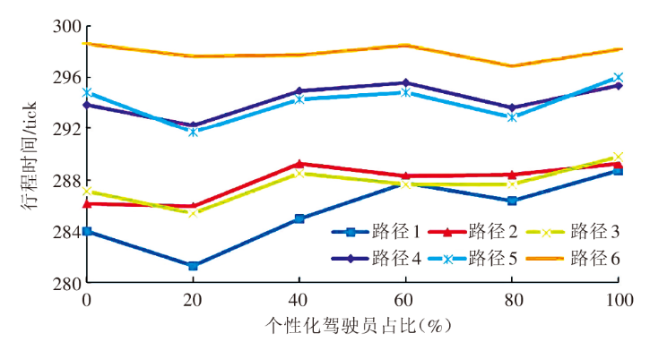
通过观察几组实验结果可知:当路网饱和度较高时,尽管个性化驾驶员占比不断变化,但路径行程时间已经趋于稳定。而此时在仿真模型中,路网并不拥堵,该环境下的博弈协商过程实现了个性化驾驶员决策与路网最优规划之间的平衡。当路网饱和度较低时,个性化驾驶员占比为20%时路径行程时间较短。
(2)博弈协商过程接受度分析
在考虑博弈协商过程接受度时,依照不同的个性化驾驶员比例进行5组实验。其中,个性化驾驶员占比20%和100%时,路网饱和度与驾驶员接受比例的关系如图9 和图10 所示。
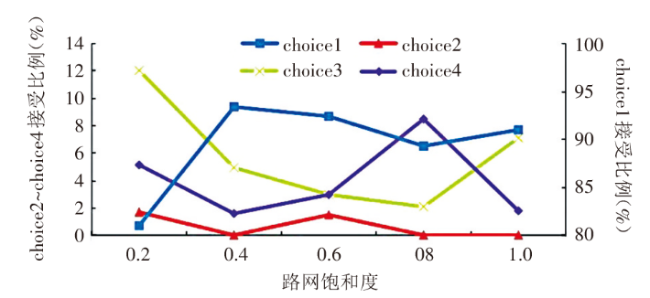
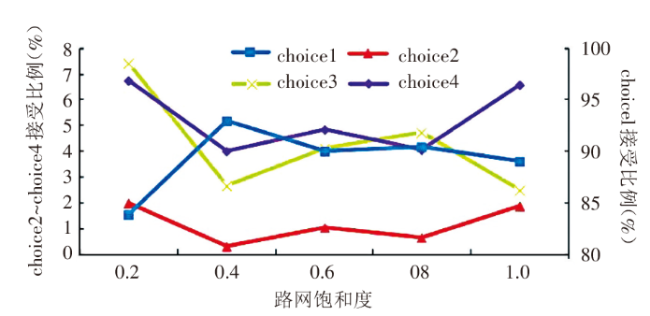


由图9 和图10 中博弈协商结果可以发现,第一次博弈协商时路网管理者与驾驶员达成一致的比例很高,且在同一个性化驾驶员占比下,整个博弈协商机制的成功率随着路网饱和度的增大而提高。然而,当改变个性化驾驶员占比时,博弈协商机制的成功率变化幅度较小,证明该机制能够适用于较为复杂的路网环境。
从综合仿真模型运行结果可以看出,本研究所提出的博弈协商机制能够以较高的接受度适用于车联网环境。在该机制的作用下,驾驶员可以将自己的个性化决策与系统最优决策进行充分交流,提高了车联网环境的服务水平。而在路网饱和度较低的情况下,协商机制的效果并不显著,仅在个性化驾驶员占比较低时才有效果,此时驾驶员直接选择系统最优的决策将更有利于提高路网运行效率。
4 结语
本研究综合考虑了车联网环境下路网管理者提出的系统最优决策与驾驶员个性化出行决策之间的冲突,并提出了一种博弈协商机制,使驾驶员个性化决策与系统最优决策能够充分交流,从而平衡路网管理者与驾驶员双方利益。在分布式协同控制视角下,本研究基于Net-Logo多智能体仿真软件,搭建了网联交通系统仿真平台,对所提出的协商机制进行仿真验证。仿真结果表明,在路网饱和度较高的情况下,无论个性化驾驶员占比高低,该协商机制均能提升路网状况的稳定性。总体而言,本研究提出的博弈协商机制能够有效指导车辆路径决策,改变了以往研究中只注重系统或者用户效益最优的协商方法,在提升交通网络性能和用户出行体验方面具有较大潜力,为今后车联网环境的运营提供一种可借鉴的协商服务策略。
本研究设定的路网环境为经典单向路网,所制定的博弈协商机制包括三次交流过程,存在一定的协商失败比例。因此,仍需针对复杂路网状况以及协商交流过程数量与方式对于博弈协商机制成功率的影响做深入研究。