
0 引言
通勤出行是指通勤者往返于居住地、工作地之间的出行,是城市居民最基本和最重要的出行。通勤出行在高峰时段高度聚集,对大城市交通运行,尤其是早晚高峰时段的交通运行起着至关重要的作用,是导致早晚高峰拥堵的主要原因之一,而交通拥堵也会影响通勤出行的效率和品质,是社会关注的重点。因此,深入分析城市通勤出行特征,挖掘通勤出行与交通拥堵的关系机理,为优化通勤出行的组织管理和服务提供依据,是缓解高峰拥堵、提升出行品质的重要突破口。
对通勤特征的挖掘一直受到研究者的广泛关注,目前已有的针对通勤出行的研究主要集中于4个方面。一是通勤基本参数提取与通勤特征分析。该类研究主要通过识别通勤出行链获得通勤时耗、距离、出发时间等信息[1],进而研究各通勤参数的相关性[2],或通过不同城市、不同区域的指标对比,识别城市或区域的典型通勤特征[3],抑或对极端通勤[4]、跨城通勤[5]等特殊通勤出行进行分析,以评估典型城市或区域通勤特征。二是通勤行为选择模型搭建,包括探讨通勤出行方式选择影响因素(如土地利用[6]、城市建成环境[7]、行程时间[8]等),研究在个体及家庭[9]、有无私家车、时间价值差异[10]等方面拥有不同特征的通勤者的出发时间选择、通勤路径选择行为[11]等。该类研究尝试通过调整所识别的通勤行为影响因素,实现通勤出行干预。三是通勤与城市空间关系分析,主要应用在城市规划、交通规划方面,包括城市或区域通勤圈识别[12]、职住平衡探讨[13]、基于通勤出行的城市空间结构分析[14]、城市空间问题识别与规划建议[15]等。该类研究以通勤空间分布特征指导城市空间规划,以达到优化城市空间结构的目的。四是通勤与交通运行的关系研究。已有研究大多从通勤行为影响因素的调节或城市空间优化入手,开展以高峰期缓堵为目的的错峰通勤方案研究[16]、高峰通勤拥堵收费研究[17]、通勤合乘拼车研究[18]等,间接作用于缓解交通拥堵,直接开展通勤与交通运行关系研究的较少。Wu等[19]研究了不同通勤行为与拥堵满意度的关系,但并未探讨如何缓堵;胡晓婧等[20]探讨了通勤出行与交通运行的关系,但仅得出了通勤量大、通勤距离长会导致交通拥堵加剧等定性结论,缺乏对通勤出行与交通运行关系的量化研究;Scott等[21]研究发现通过职住平衡来提高通勤效率可有效缓解拥堵,但从现实角度考虑实施难度大;Amirgholy等[22]构建了城市路网拥堵宏观基本图,并尝试通过调节高峰通勤出行量来优化交通运行状态,但并未探讨二者的相关性;陈燕凌等[23]研究了通勤出行对路网速度的贡献度,虽给出了通勤周转量与路网速度的函数关系,但拟合相对简单,误差较大,所提出的模型对诸多通勤交通现象尚无法给出理论解释。
从信息获取来看,传统通勤出行信息主要基于交通调查手段获得,存在更新慢、不连续等缺陷。手机信令等大数据资源,为通勤出行的深入探索提供了数据基础,拓展了通勤出行特征分析的维度,提升了指标结果的精准度。手机信令数据已逐步应用于通勤出行研究的多个层面,但现阶段已有的研究仍重点关注数据的基础处理[24]与通勤指标的提取等,需深入挖掘与探索手机信令数据在通勤特征研究中的应用。
总体来看,现有通勤出行研究重点关注通勤行为、指标评价、城市规划等方面,对面向缓解交通拥堵的通勤出行与交通运行关系的机理研究不足。在此背景下,本文将借助手机信令大数据,在对比通勤、非通勤出行特征差异的基础上,分析通勤出行与交通运行的相关关系,建立考虑时变差异的通勤出行与路网速度六段模型,探讨不同模型区间的含义及所揭示的交通运行机理,并基于模型给出典型交通现象与特征的理论解释。
1 数据与方法
1.1 通勤出行界定
本文所述通勤出行指上下班、上下学等有明显早晚高峰往返出行规律的出行,相比于休闲娱乐、探亲访友、就医、旅游等非通勤出行,通勤出行的空间分布、指标参数等具有其典型特征。
1.2 数据源说明
手机信令数据的获取具有长期持续性,可用于对通勤出行的连续追踪与特征识别。本文以北京市为背景,基于2020年全年手机伪码信令数据进行中心城区通勤出行识别与特征提取,并以2020年12月数据为代表进行分析。同时,选取与信令数据相同时空范围的道路网运行速度指标表征交通运行态势,开展通勤出行与交通运行关系研究。
1.3 通勤出行识别方法
本文通过雷方舒等[25]提出的基于手机信令数据的通勤人口识别方法提取通勤出行信息。
(1)基于TOPSIS打分与K-Means聚类相结合的方法识别北京市通勤人口
通过分析通勤出行的时间、空间、频次等属性特征,提取典型通勤出行特征指标;基于熵权法[24]确定各通勤特征指标权重,结合主观权重,确定各通勤特征指标综合权重值;基于TOPSIS(Technique for Order Preference by Similarity to an Ideal Solution)打分法,分别给每位手机用户进行通勤属性评分;基于K-Means聚类法进行通勤属性得分聚类,识别通勤特征最显著类,定义为通勤人口。
(2)识别通勤人口工作地与居住地地理空间信息
针对(1)中识别的每位通勤用户,根据其连续一个月内,日间10:00—15:00驻留空间、驻留总时长等参数,识别通勤人口日间工作地空间信息;根据其连续一个月内,夜间23:00—04:00驻留空间、驻留总时长等参数,识别通勤人口夜间居住地空间信息。
(3)识别通勤人口往返于居住地与工作地之间的通勤出行
基于雷方舒等[26]提出的手机信令数据出行链识别方法,识别通勤人口每一次出行的起讫点(OD),根据(2)中识别的通勤人口职住地信息,提取每位通勤者往返于居住地、工作地间的出行,定义为通勤出行。其中,中心城区通勤出行是指出发地或目的地至少一端在中心城区的出行。
(4)结合综合交通调查等数据进行结果扩样校核
以北京市综合交通调查中相同时空范围的出行量、通勤出行量数据为基准,进行手机信令数据通勤出行结果的扩样校核。
2 通勤出行特征分析
2.1 出行时段
通勤出行在早晚高峰出行中占据主导地位,早高峰7:00—9:00,北京中心城区通勤出行约占全部出行的80%,晚高峰17:00—19:00通勤出行占比也达到60%左右;但在平峰时段11:00—15:00,非通勤出行量占比超过80%,占据主导地位。因而,要缓解北京早晚高峰交通拥堵水平,通勤出行是核心因素;而对于平峰时段,应重点考虑非通勤出行的影响。
2.2 出行距离与出行时耗
北京中心城区通勤出行平均距离约13.3km,通勤出行平均时耗约51min;非通勤出行平均距离约10.5km,非通勤出行平均时耗约40min。可见,由于通勤出行受城市用地特征等因素的影响,出行距离与时耗显著高于非通勤出行。
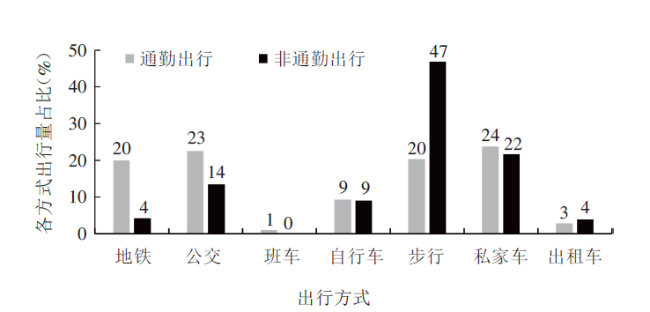
2.3 出行结构
通勤出行中地铁、公交出行占比明显高于非通勤出行,非通勤出行中步行出行方式占比较为突出(见图1 )。整体来看,通勤出行中的绿色出行(包含地铁、公交、班车、自行车、步行)占比约为73.2%[27],略低于非通勤出行中的绿色出行占比(73.8%),但二者差异并不显著。
2.4 出行空间分布
3 通勤出行与交通运行模型构建
3.1 通勤出行与路网速度关系分析
为探究交通运行与通勤出行之间的关系机理,本文以北京市2020年12月21日为例,选取5:00—22:45时段,以15min为时间粒度,还原通勤出行与路网速度关系曲线(见图3 )。结果显示,受一天中不同时段通勤出行、非通勤出行差异的影响,通勤出行与路网速度的关系也呈现明显的按时间分段特征。
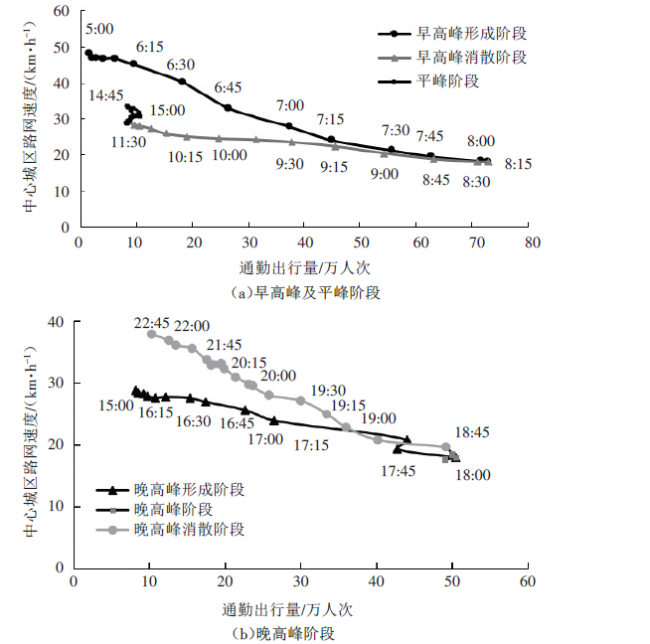
(1)5:00—8:15早高峰逐渐形成,随着通勤出行量的增加,路网速度基本呈线性降低趋势;
(2)8:15—11:30早高峰逐步消散,通勤出行量逐渐回落,路网速度基本呈线性升高趋势,但受非通勤出行增多的影响,路网速度回升速率明显低于早高峰形成阶段速度降低速率;
(3)11:30—15:00为平峰,通勤出行量处于较低水平且与路网速度关系无明显规律性,路网速度主要受非通勤出行的影响;但明显可见,当通勤出行量低时,非通勤出行对路网速度的影响不大;
(4)15:00—18:00晚高峰逐渐形成,随着通勤出行量的再一次增加,路网运行速度再次呈线性降低趋势,且同样受非通勤出行的影响,降低速率的大小与早高峰消散阶段回升速率接近;
(5)18:00—18:45处于晚高峰出行量高点,通勤出行与路网速度关系无明显规律性,通勤、非通勤出行量均处于较高水平,路网速度是二者共同作用的结果;
(6)18:45—22:45晚高峰逐步消散,通勤出行量逐渐回落,路网速度再次呈线性回升特征,且回升速率的大小与早高峰形成阶段下降速率相近。
3.2 模型构建
基于以上特征分析,划分出早高峰形成阶段 、早高峰消散阶段 、晚高峰形成阶段 、晚高峰消散阶段 、晚高峰阶段 、平峰阶段 共6个时段,构建通勤出行对交通运行贡献度六段模型。在高峰形成及消散阶段,以线性函数表征通勤出行量与路网速度的关系;平峰阶段,认为路网速度呈现一定范围内的随机特征;晚高峰阶段,路网速度为通勤、非通勤出行量的二元函数:
式(1)中: 为路网速度(km/h); 为时间切片; , , , 分别为早高峰形成与消散阶段、晚高峰形成与消散阶段线性函数系数,表征相同通勤出行量变化水平下路网速度变化速率,本文将其绝对值定义为通勤出行对交通运行的贡献度; , 分别为晚高峰和平峰阶段函数系数; 为一定取值范围内的随机变量; 为通勤出行量(万人次); 为非通勤出行量(万人次); 为通勤、非通勤出行量的二元函数。
3.3 模型参数标定
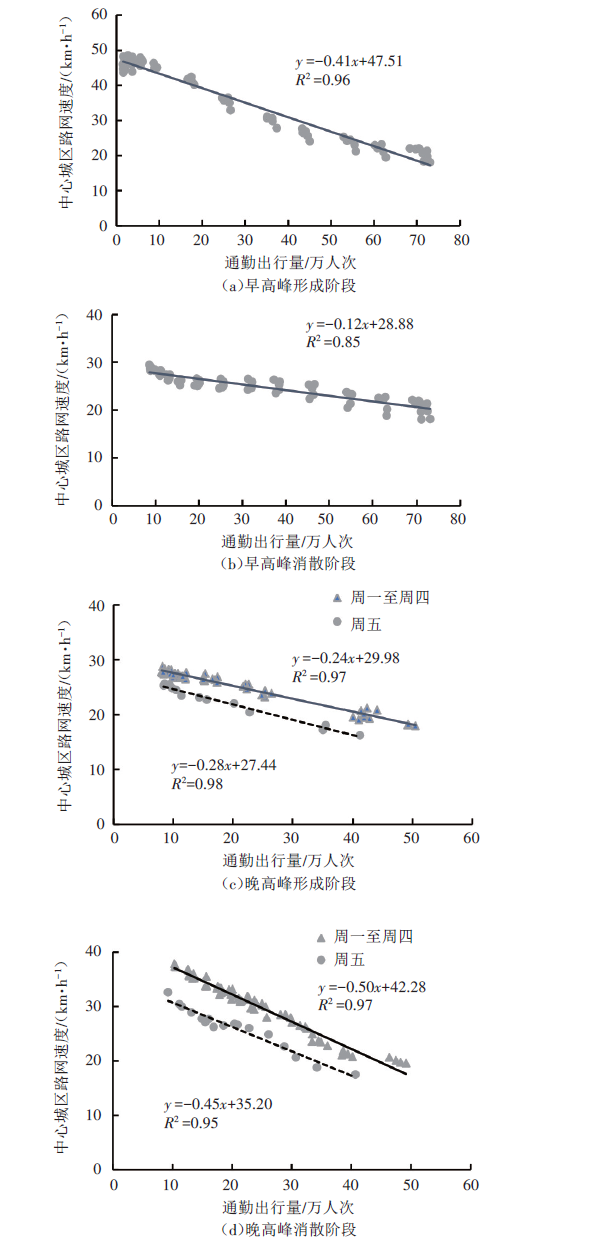
本文选取北京市中心城区工作日2020年12月14日至18日05:00—22:45时段内以15min为时间粒度的通勤出行量与路网速度数据进行模型参数标定。高峰形成与消散阶段通勤出行量与路网速度关系拟合曲线如图4 所示。
得到模型参数标定结果:
其中, , , , 分别为早高峰形成与消散阶段、晚高峰形成与消散阶段通勤出行对路网速度的贡献度; 为表征模型解释作用的可决系数。模型参数标定结果显示,高峰形成与消散阶段通勤出行与路网运行速度高度线性相关,可决系数 均超过0.85;早高峰形成阶段、晚高峰消散阶段通勤出行对路网速度的贡献度最高;早高峰消散阶段及晚高峰形成阶段,非通勤出行量增加导致通勤出行贡献度减弱。此外,相同通勤出行量水平下,周五晚高峰形成与消散阶段路网速度较其他工作日明显偏低,为非通勤出行量增加所致。
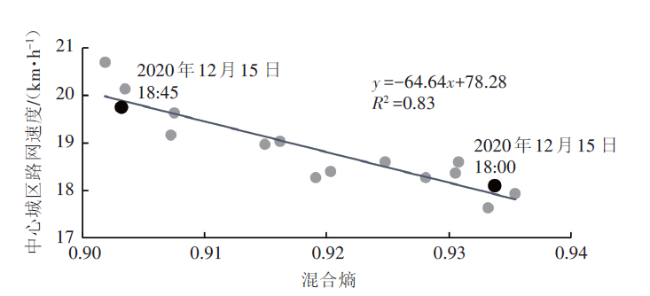
晚高峰阶段,通勤出行减少,非通勤出行增加,虽总出行量不变,但路网速度降低,本文以熵函数计算晚高峰阶段通勤、非通勤出行的混合程度:
式(2)中: 为通勤、非通勤出行混合熵函数; , 分别为通勤、非通勤出行量占总出行量的比例。
基于北京市中心城区2020年12月14日—17日18:00—18:45时段内以15min为时间粒度的通勤、非通勤出行量数据,计算晚高峰时段通勤、非通勤出行混合熵。以12月15日18:00数据为例,通勤出行量 为49万人次,非通勤出行量 为26万人次,则通勤、非通勤出行占总出行量比例 , 分别为: , 。
基于式(2)熵函数计算该时刻通勤、非通勤出行混合熵,有: 。
以此类推可计算晚高峰所有时段通勤、非通勤出行混合熵。基于熵值计算结果与相同时段路网速度数据进行模型参数标定(见图5 )。拟合发现线性函数可较好地表征晚高峰阶段通勤、非通勤混合熵与路网速度的关系,可决系数 达0.83,函数系数 ,进而可得出结论:晚高峰阶段,当通勤、非通勤出行均处于较高水平时,路网速度受通勤、非通勤混合程度影响,混合熵越高,路网速度越低。
平峰阶段,路网速度处于较高水平,与通勤、非通勤出行均未呈现明显函数关系,本文认为平峰阶段的交通运行状态呈现一定范围内的随机特征。
基于此,得到标定后的通勤出行对道路运行贡献度六段模型(周一至周四):
3.4 机理解释
本文所建的通勤出行对交通运行贡献度模型可对两个交通现象作出解释:
(1)工作日早高峰出行量、通勤出行量均高于晚高峰(见图6 ),但晚高峰却更为拥堵(见图7 ),其原因为晚高峰的出行混合熵明显高于早高峰,导致了晚高峰拥堵程度更为显著。
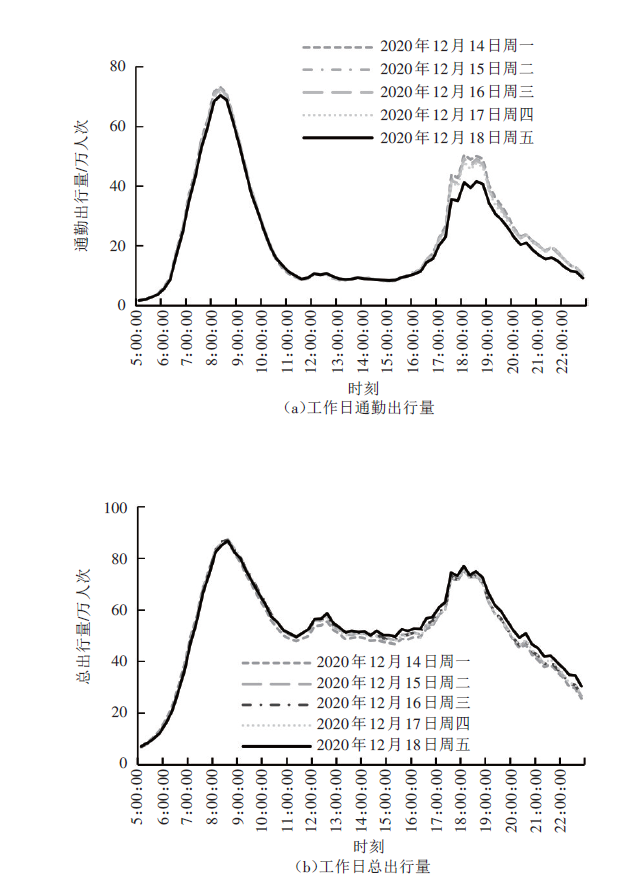
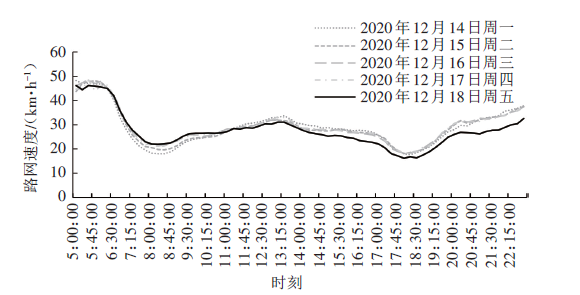
(2)周五晚高峰通勤出行量低于其他工作日(见图6 (a)),总出行量与其他工作日基本持平(见图6 (b)),路网拥堵水平却明显加剧(见图7 )。这是由于非通勤出行量增加,使得通勤、非通勤出行量均处于较高水平,根据模型中的晚高峰阶段函数,出行混合熵增加导致了周五晚高峰拥堵程度加剧。
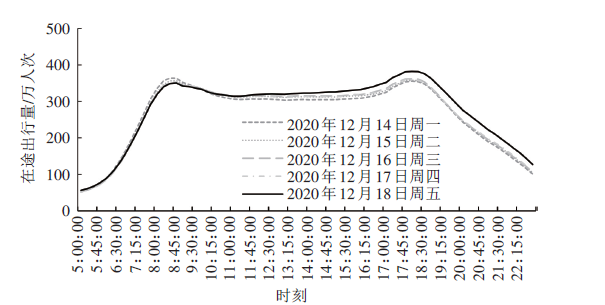
此外,本文进一步探索了出行混合熵增加导致拥堵加剧的原因。通勤出行周转量大,但具有走廊聚集特性,非通勤出行周转量小但具有无序性,在较高强度通勤出行基础上叠加非通勤出行,会使路网无序性增加,加速整个交通系统的熵增,导致出行时耗增加,相同出行量条件下在途出行增多,进而导致拥堵水平加剧。本文提取工作日各时间切片的在途出行量(即从出发地到目的地走行途中的出行),发现不同于出行量早高峰高于晚高峰、一周各天基本无差异的分布特征(见图6 (b)),在途出行量(见图8 )表现出晚高峰高于早高峰,且周五较其他工作日晚高峰明显增加的特征,证实了前文所述。


3.5 模型讨论
通勤出行对交通运行贡献度六段模型可用于量化评估不同时段、不同程度的通勤及非通勤出行需求变化带来的交通运行状态变化水平,模型使用简便、可操作性强,可用于以缓堵为目的的高峰时段出行需求干预与调节,并量化评估出行需求变化对交通运行的影响程度,可为拥堵收费、错时通勤、非通勤出行引导干预等需求调控政策的制定提供依据,支撑城市交通拥堵治理工作的开展。
4 结论
本文基于手机信令等大数据对通勤、非通勤出行的时耗、距离、空间分布等特征进行了剖析,通过分析通勤出行与路网速度的分时间段关系构建了通勤出行对交通运行贡献度六段模型,并分段进行模型参数标定,得出如下结论:
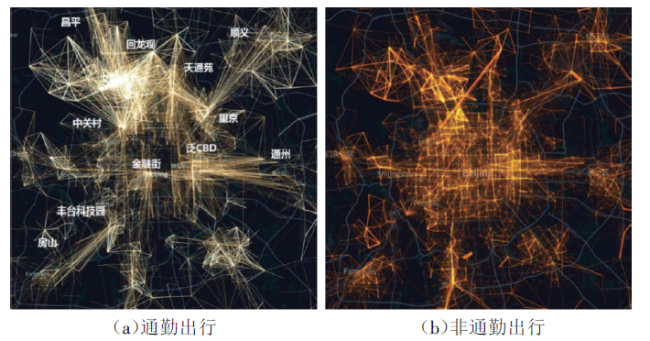
(1)通勤出行距离、时耗偏长,周转量大,具有一定走廊聚集特性;非通勤出行距离、时耗较小,周转量小,具有空间无序性;
(2)在高峰形成及消散阶段通勤出行量与路网速度呈显著的线性关系,可决系数超过0.85;早高峰形成阶段与晚高峰消散阶段通勤出行对路网速度的贡献度最高;
(3)晚高峰阶段,路网速度是通勤、非通勤出行量的混合熵函数,路网速度随熵值的增加而降低;
(4)晚高峰较早高峰拥堵更显著、周五晚高峰拥堵加剧都是由于通勤、非通勤出行混合熵增加,带来网络无序性增加,进而导致交通系统熵增所致。
由此可知,若要缓解高峰时段拥堵,除了引导错峰通勤等通勤需求管理措施外,降低弹性的非通勤出行量也具有重要作用。需要指出的是,本文主要以线性函数进行模型标定,下一步工作中,将以更高阶函数或更细粒度的时间段划分进行拟合,并深入挖掘平峰阶段函数特征,以进一步提升模型精度和准确性。